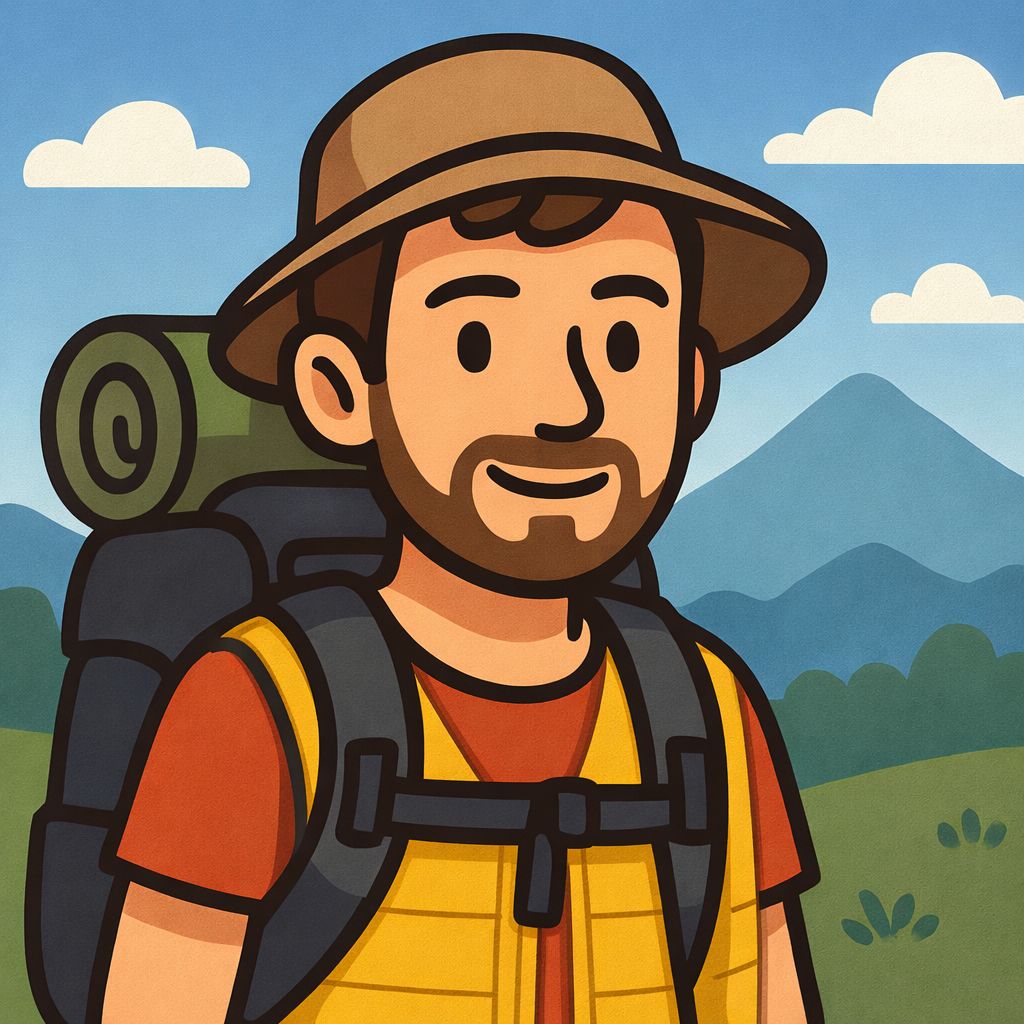
I Had No Idea Where I Was
The first time I went backpacking, I borrowed everything. I borrowed the pack, the pants, and the shirt, and I borrowed the knowledge of where we were going.
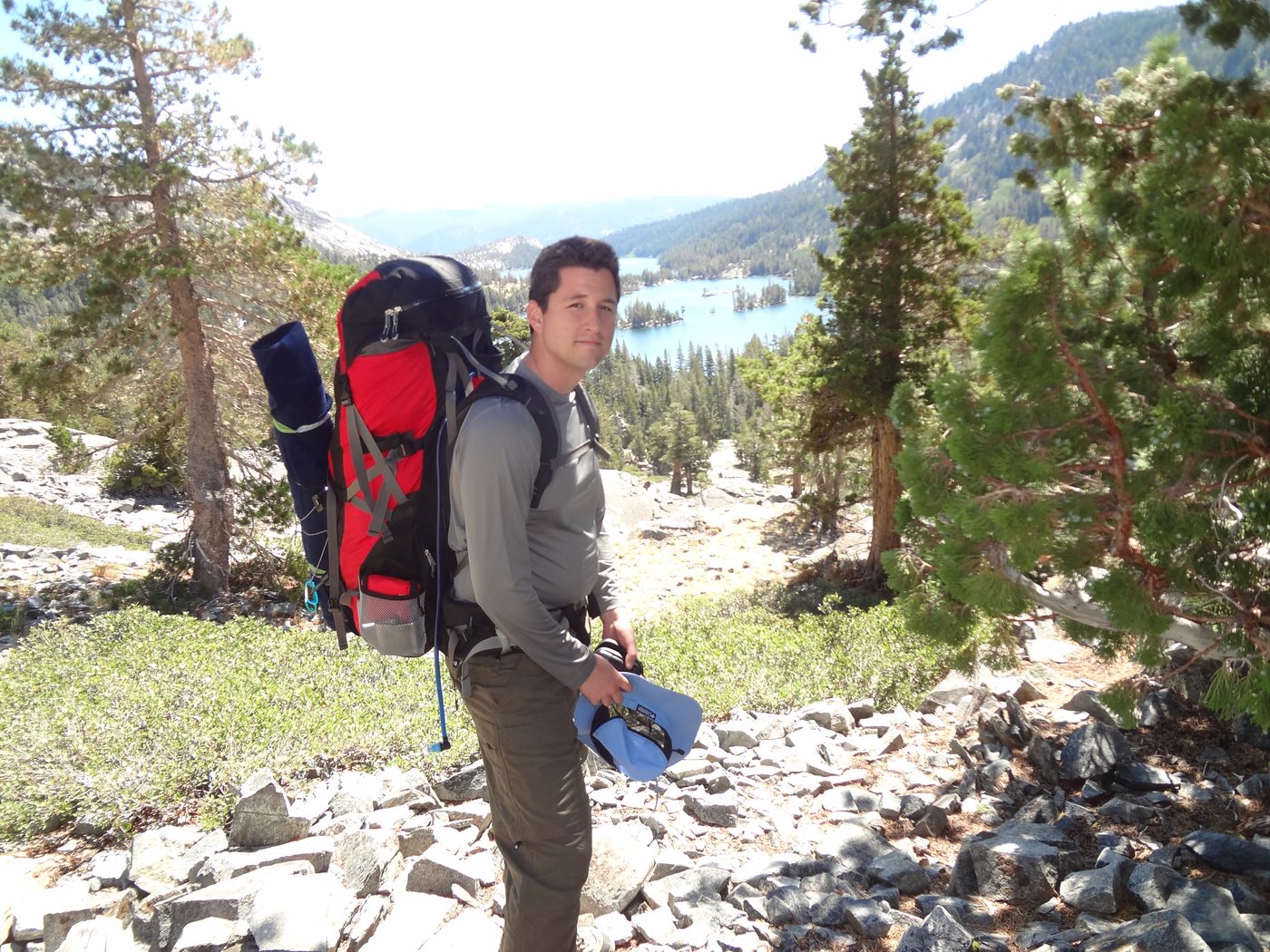
Above Echo Lake, 2012. That's my sleeping bag rolled on top of the pack. The bag would not compress, so up the bag went.
That's me above Echo Lake on my first trip into the Sierra. The red pack belongs to my buddy. So do the pants and the shirt. My sleeping bag didn't pack down small, so I strapped it to the top and let it ride. I was making the trip work on a shoestring, and I had exactly one advantage, which was two friends who knew what they were doing.
Day 1 Just keep up
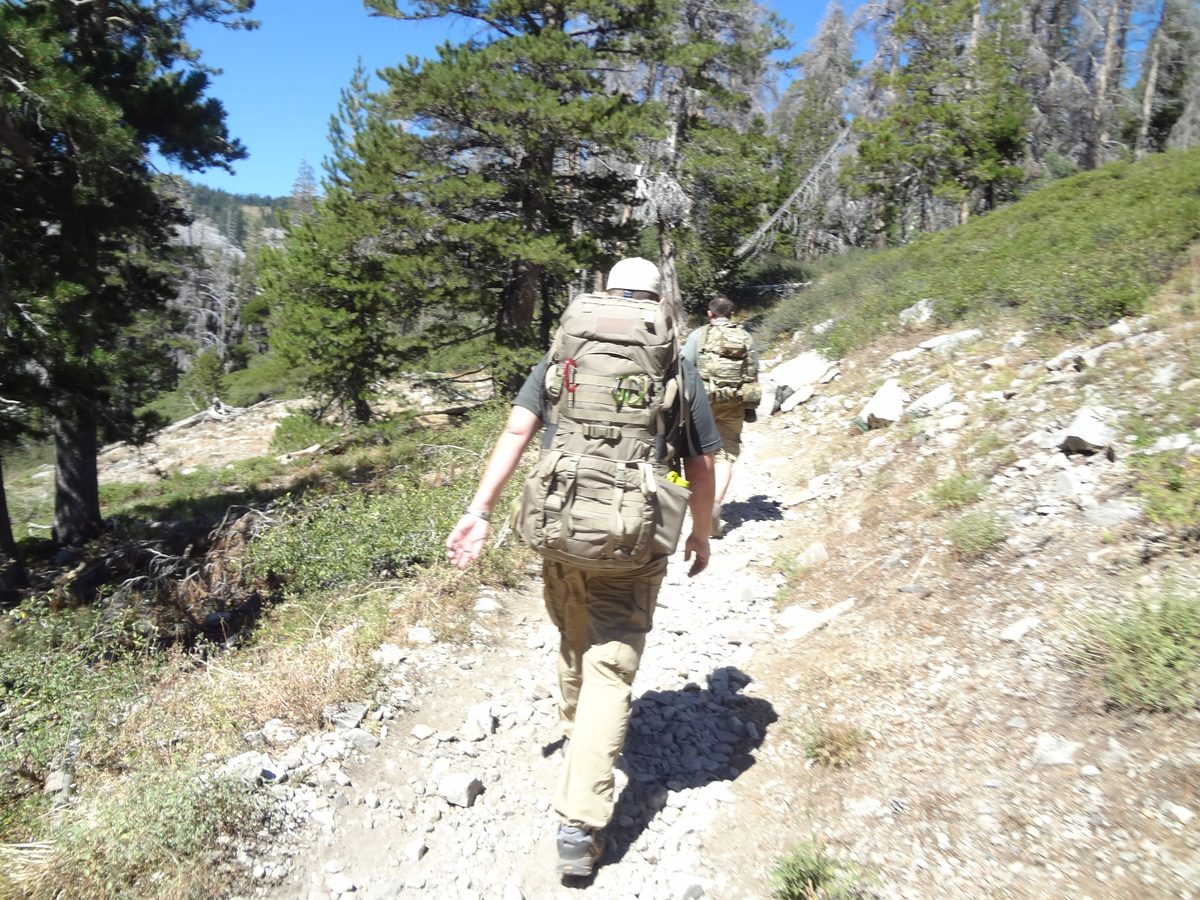
On the trail. My job was to keep up.
On the trail, I had one job, and that job was to keep up. I didn't carry a map. I didn't know what topo lines meant. I didn't have GPS. When my buddies talked about which way to go, or debated where we actually were on the route, I had nothing to offer. I just kept walking and trusted that we'd end up somewhere worth the effort.
At some point, we had a conversation about our position on the trail. Someone pulled out a paper map and pointed. Everyone nodded. I nodded too. I had no idea what I was looking at.
Arrival We just… got there
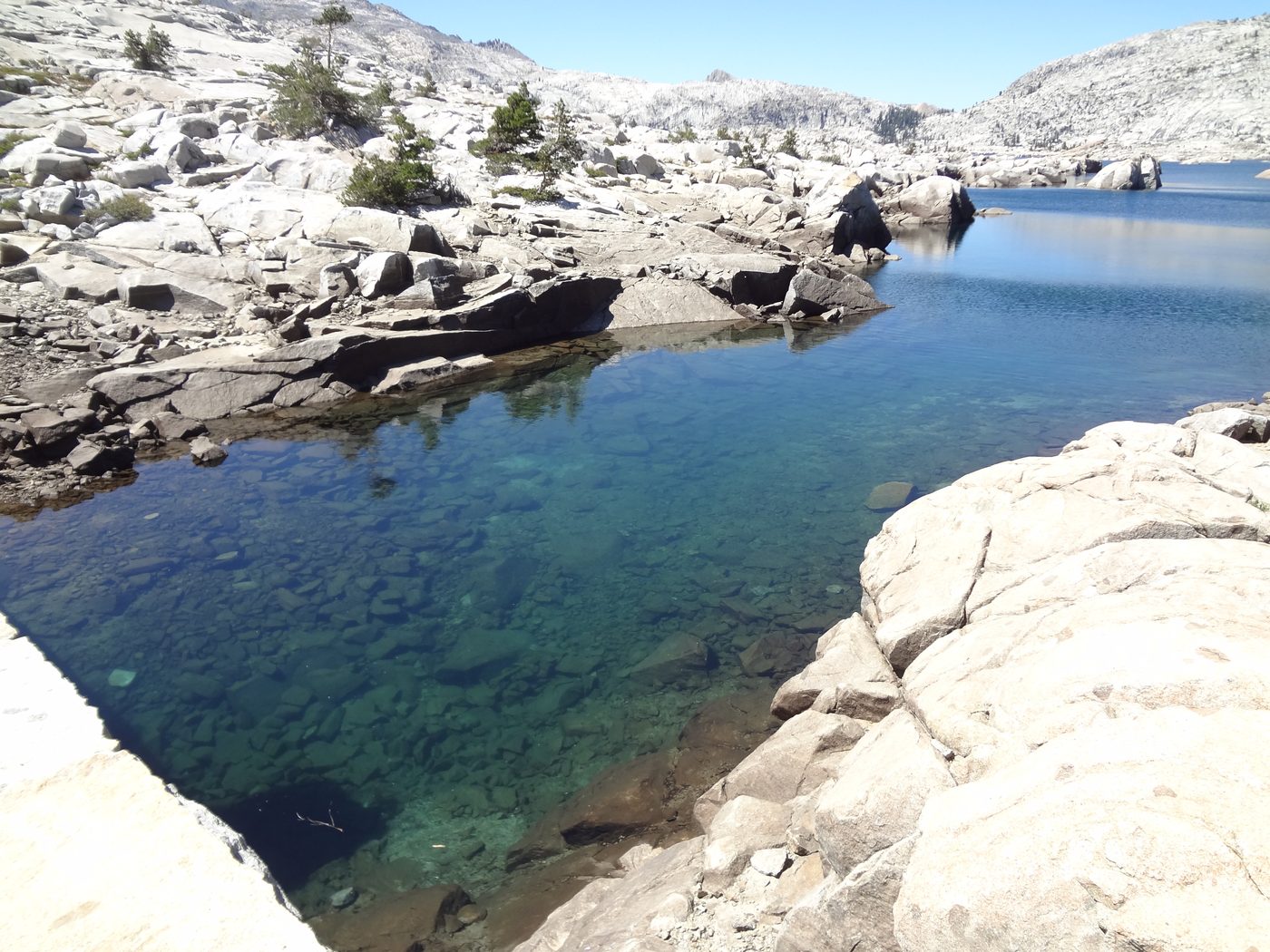
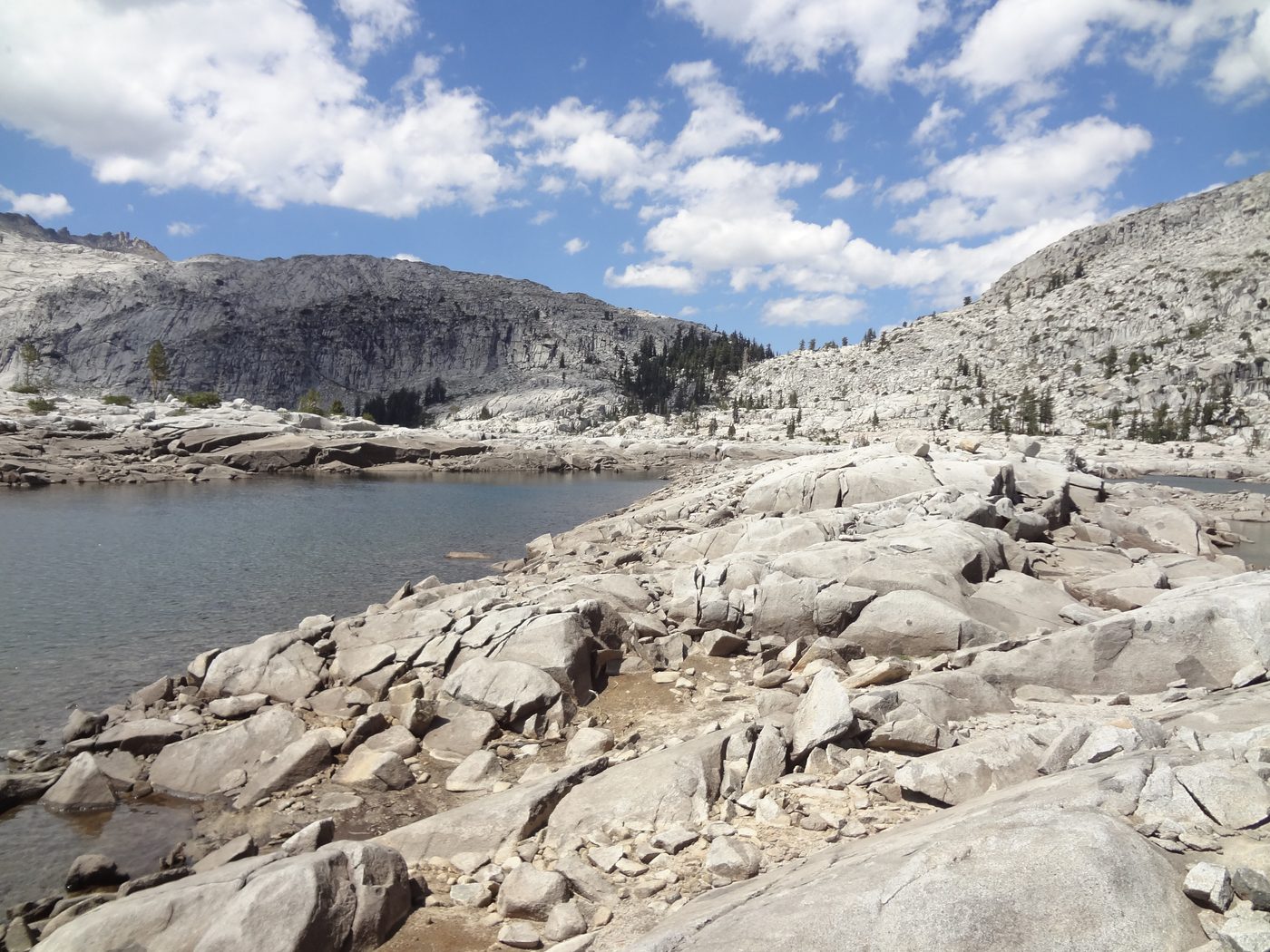
I know now that this is American Lake. At the time I had no idea, and I could not have found the lake on a map if you had handed me one. We just arrived. Our friends led us there, and the lake was one of the most beautiful places I had ever seen. I stood at the edge of the water, completely aware that I had no idea how to get back to that shore on my own.
I was completely out of my depth and completely dependent on other people's knowledge, and I was completely hooked.
Camp Learning by doing it wrong
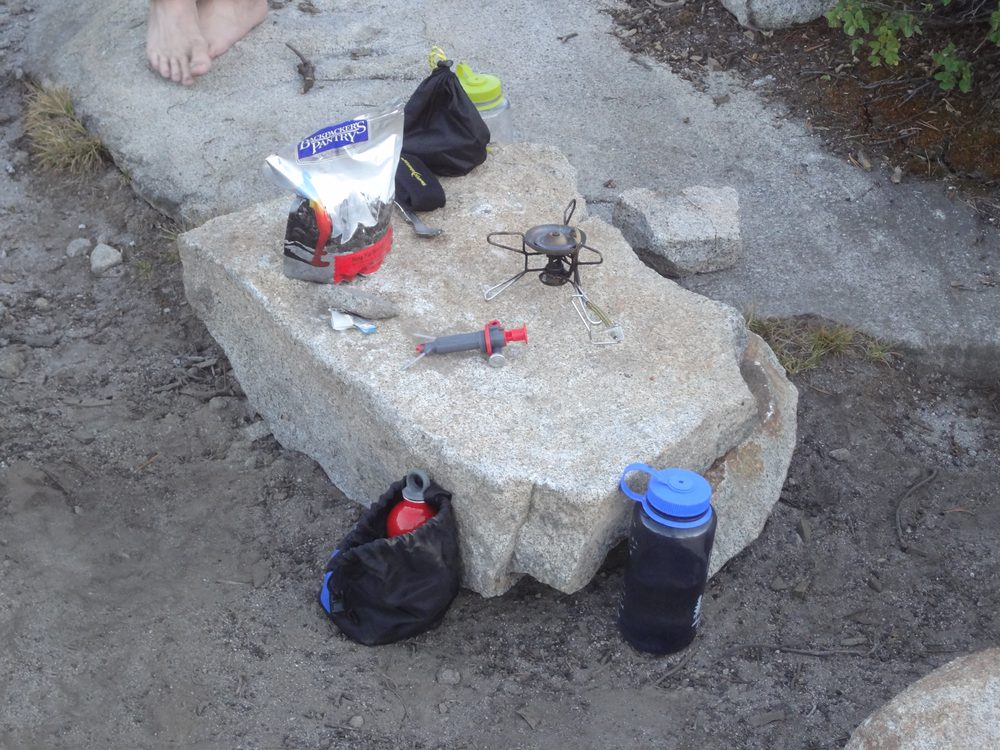
My full kit on the granite. I draped my food over a tree branch that night instead of doing a proper bear hang. The chipmunks found it by morning.
Camp that night reflected everything else about my preparation. I "hung" my food in a tree, which was not a bear hang at all. I draped the bag over a branch and called the job done, and by morning the chipmunks had found the bag and helped themselves. I pitched my tent on the first flat-ish spot I could find.
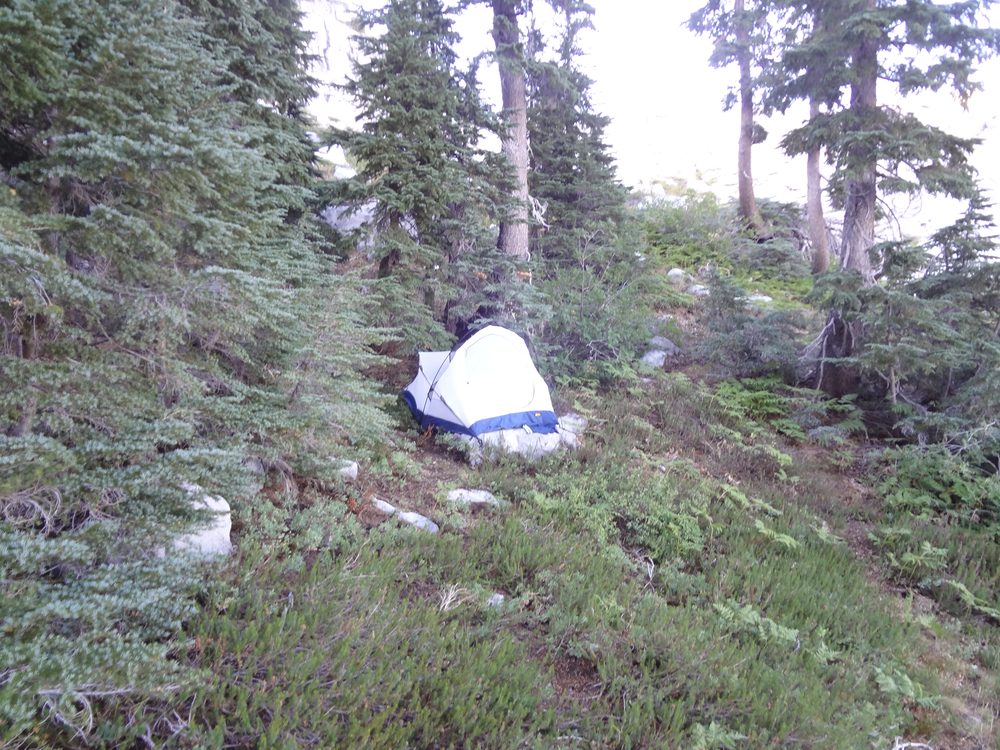
I didn't know to look for a better spot. I didn't know what better looked like yet.
That night Through the screen
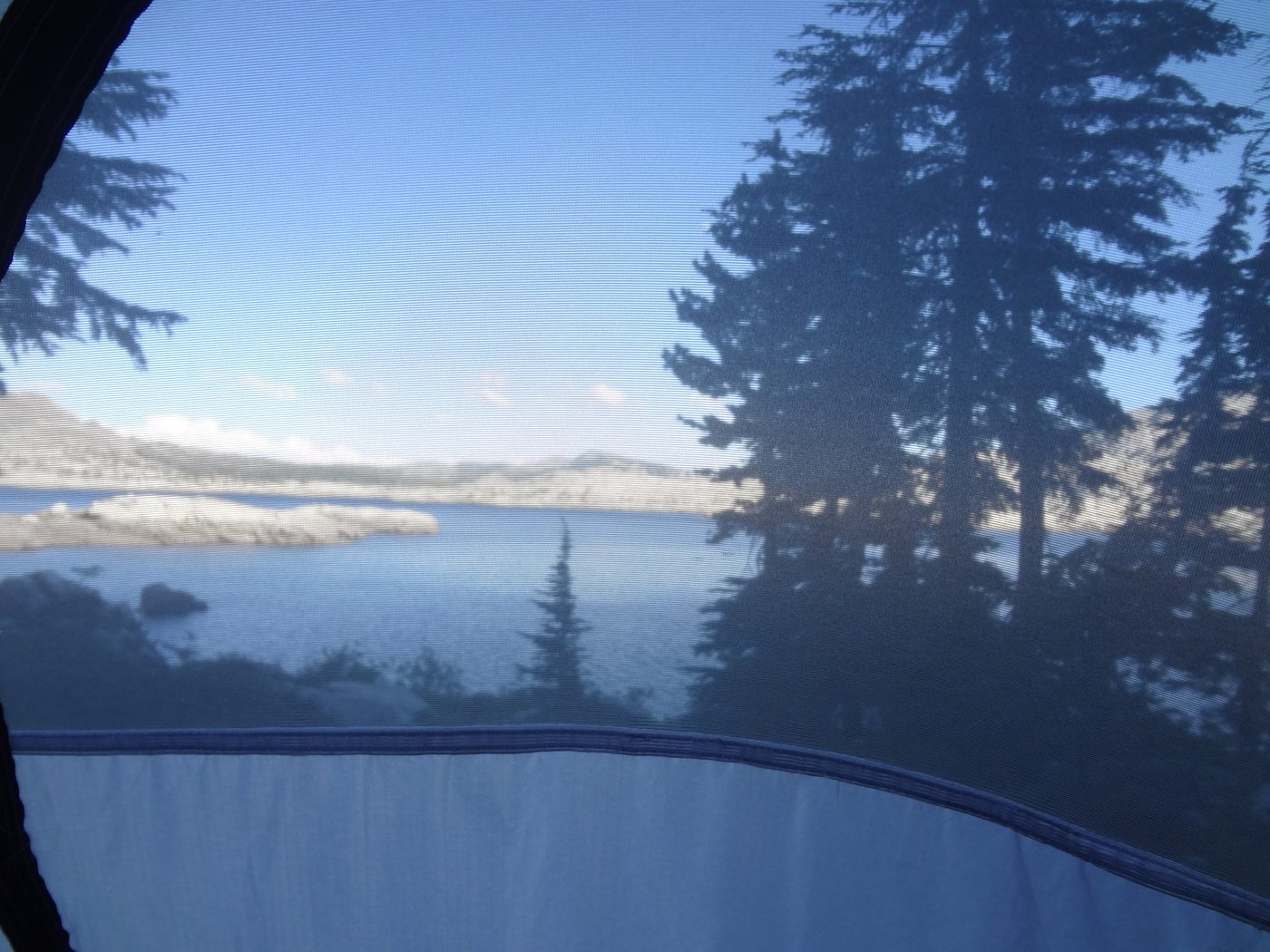
Then I crawled inside and looked out through the tent mesh. The lake lay out in front of me, the ridgeline stood above the far shore, and the last light went flat across the granite. I had done nothing right on this trip, and I was looking at one of the most perfect views of my life.
That night I lay in my borrowed sleeping bag and knew I'd be back. But next time, I wanted to know where I was going.
The lesson You deserve to know where you are
Following someone else into the backcountry is a fine way to start. I'd recommend it. But there is a real difference between following and knowing. When you can't read the map, you can't have the conversation about where you are. You can't suggest a better campsite half a mile ahead. You can't recognize when the group has gone the wrong way. You're just along for the ride.
Every feature in this app came from a specific moment on a specific trail. The routing feature came from this trip, and from being the guy who just kept walking and hoped for the best.
When you load your route into Backpackers Friend before you leave, you carry the map in your pocket. You can see where the next waypoint is. You know what terrain is two miles ahead. You can look at a lake and tell someone exactly what it's called. You can be the one with something to offer when the trail gets confusing.
You don't have to be an expert to know where you are. You just need your own map.
Plan your first route
Backpackers Friend lets you build a route on a topo map before you leave home, with waypoints, trail-snapped navigation, and an elevation profile included. The app works completely offline, so the map stays open with no signal. Free to get started, no account required.