We Never Made It to Glacier Lake
The plan was Glacier Lake. We'd looked at the route on the map for weeks. The trip ran two nights up past Carr Lake into the granite, and the itinerary looked perfectly reasonable while we were drawing it from the couch. What the map didn't show was a ninety-degree July afternoon, a late start because somebody had to work that morning, and two thirteen-year-olds who would have very different opinions about the whole endeavor by mile two.
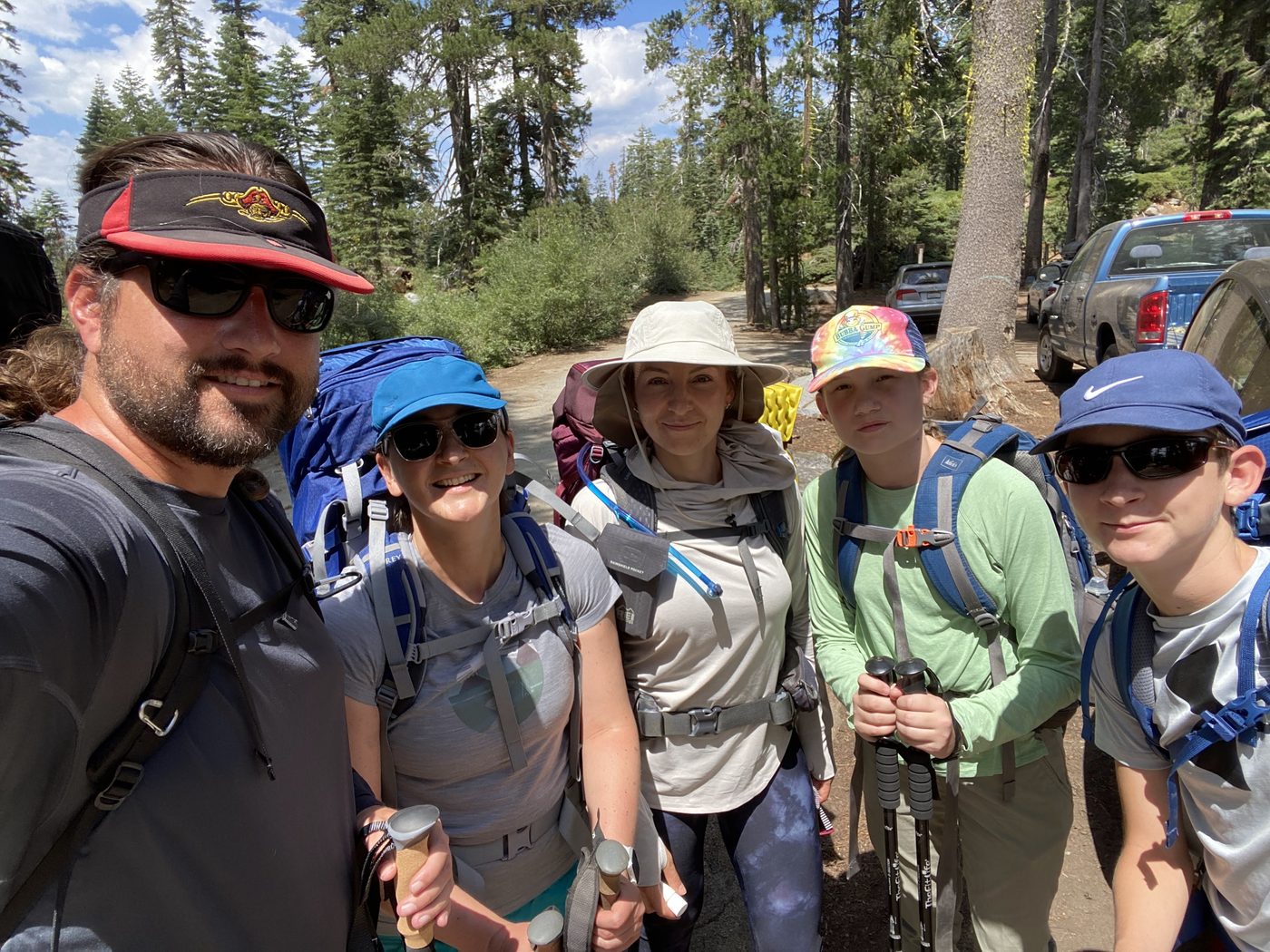
The whole crew at the trailhead, packs on and poles out and grinning. This was the high-water mark of everyone's morale for a while.
Everyone's smiling here because nobody's tired yet. We shouldered our packs well past noon, since the morning got eaten by work, so we ended up climbing in full afternoon sun, which is about the worst time to make that climb, and we headed up the trail toward the lakes.
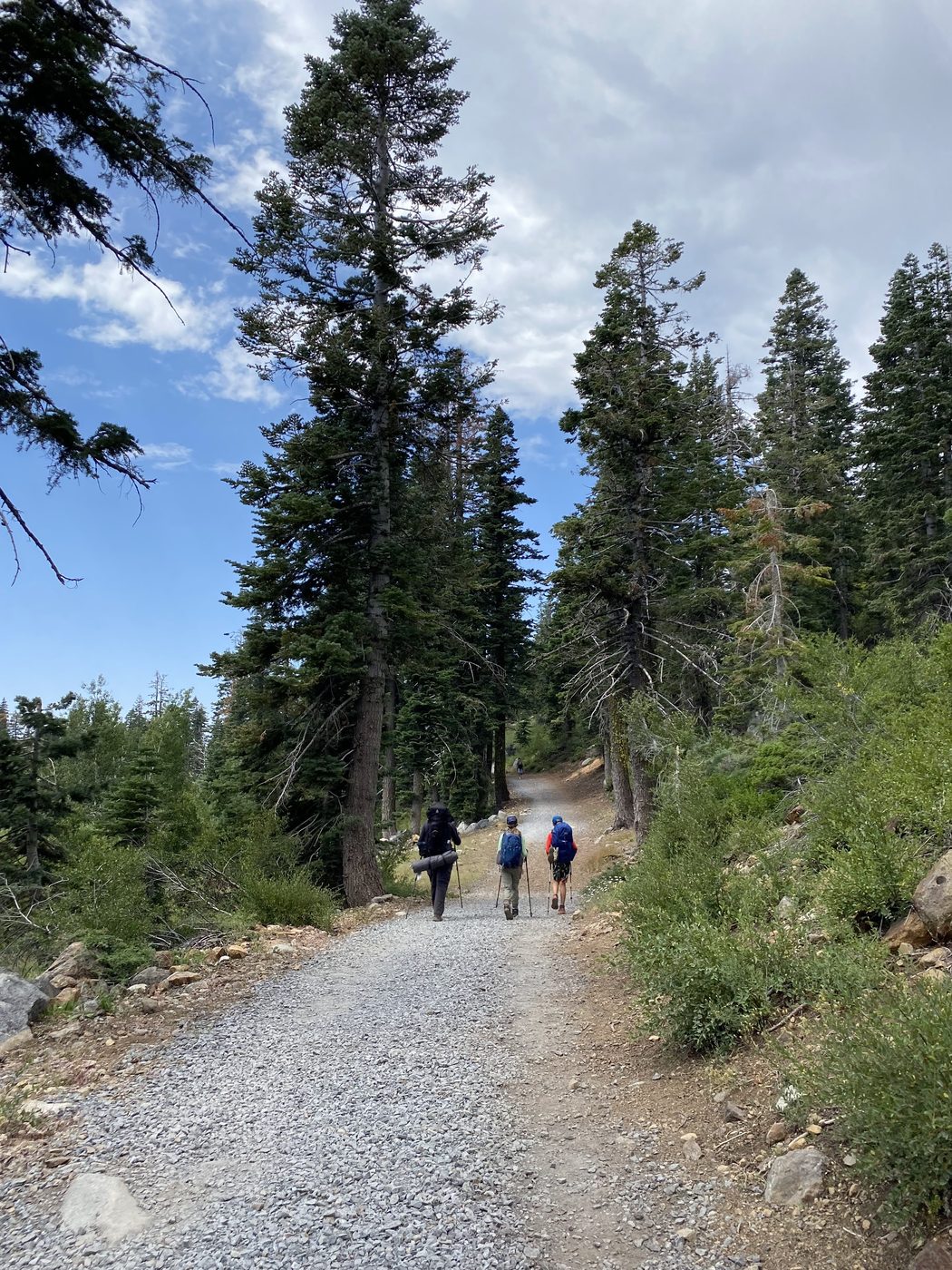
Up the dusty road into the pines. Somewhere on this stretch the complaining began in earnest.
The protests started as grumbling and graduated, with real commitment, to full sit-down strikes. Both kids were thirteen and absolutely cooked by the heat, and they would simply stop, lower themselves onto a rock, and inform us with total sincerity that this was as far as they went. We did what parents do. We cajoled, we encouraged, we promised the lake was just ahead, and we kept everyone moving toward the spot we'd circled on the map. The harder we pushed, the heavier the air got.
And then we made a different call. Glacier Lake was still another two hours up, with the elevation to match. Milk Lake was right there, closer, lower, and exactly as blue as anywhere else. We stopped. The group agreed together that this was the lake, and the agreement was a genuine community decision rather than a parental decree. The moment we said the words out loud, you could feel the pressure leave. Nobody had to prove anything to a line on a map anymore.
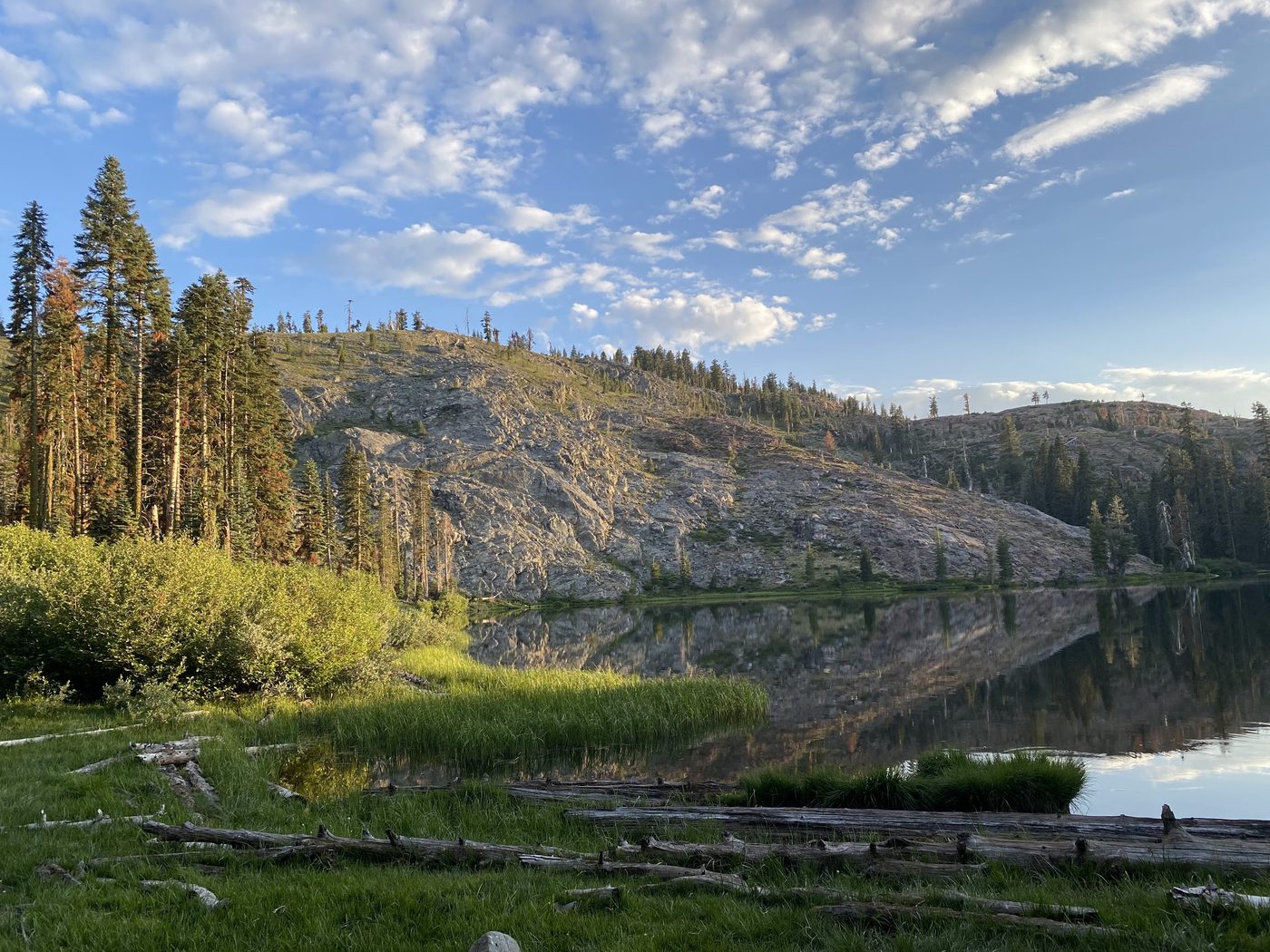
Milk Lake, which was the lake we actually needed rather than the lake we had planned on.
My daughter had been having the hardest day of anyone. The heat had genuinely flattened her, and she was hating life and done with the entire afternoon. So she just got in the lake. There was no ceremony and no testing the water with a toe, since she walked in and started to swim. Somewhere out past the shallows she came back to life, and watching her was like watching a different kid surface. She swam her heart out, all the way across, while the rest of us watched from shore.
Nobody else got in, because the bottom was soft and sludgy and that was enough to keep the rest of the group on dry land, but she didn't care even a little. At one point she went quiet and still in the middle of the lake, and called back that a bird had just dropped down and caught a fish right next to her. Then I realized how far out she actually was. I called her name and it came back off the granite again and again, the echo rolling around the basin. Half of me was doing the parental distance math; the other half was just struck by how small and far and completely happy she looked out there in the middle of all that water.
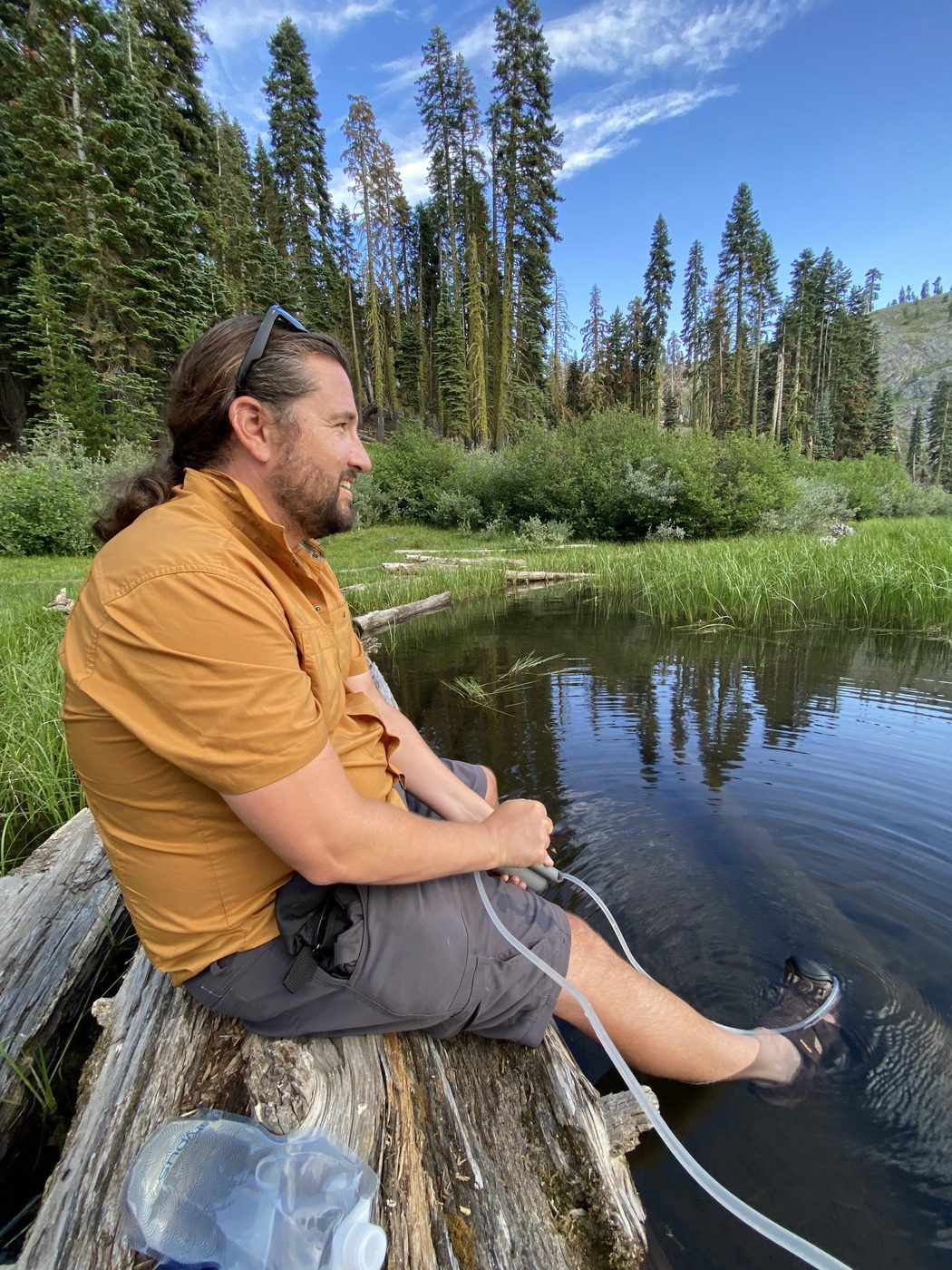
Feet in the water, filter running, nowhere else to be. This is what stopping short bought us.
With the destination off the table, the whole trip relaxed into itself. We filtered water from the lake, set up camp, soaked our feet, and let the long golden end of the day come down over the granite. The afternoon that had been a forced march turned into the kind of evening you actually came out here for, unhurried and a little sunburnt and deeply content.
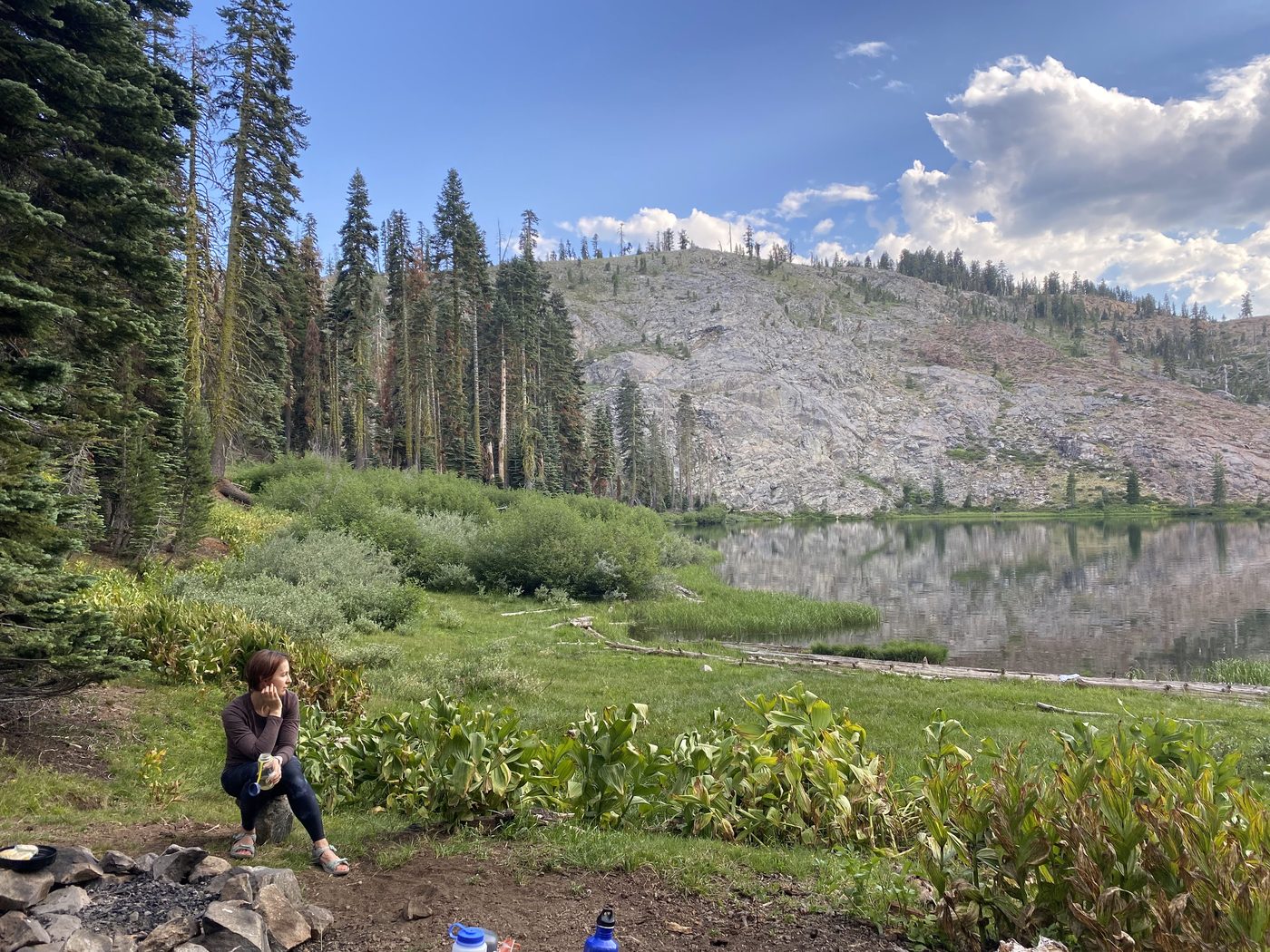
Evening at the lake we chose. Glacier Lake is still up there somewhere. It can wait.
We never made it to Glacier Lake. We talk about that trip more than almost any other. The lesson stuck, and the lesson is that the destination is the part of the plan you're allowed to let go of. On a hot day, with tired kids, the closer lake is the trip. My daughter swimming alone across an alpine lake, a bird catching a fish an arm's length away, and her name coming back off the rock were none of them on the itinerary, and all of them were the whole point.
Pick a lake you'll actually reach
We aimed too far for the day we had. Backpackers Friend shows you the leg-by-leg distance, the climb, and a difficulty read before you commit, so you can size the trip to who's actually walking it, heat and tired kids included. And when you decide to stop short, the closer lake is right there on the map, distance and all. Free to start, works fully offline, no account required.