The Trip That Taught Me to Carry a Satellite Beacon
By 2020 I'd done enough trips to think I knew what I was doing. I was older, I was wiser, and for the first time I wasn't showing up with a pack full of nothing but borrowed gear. Then the backcountry reminded me, in the most serious way it ever has, that being prepared is not the same as being ready for everything.
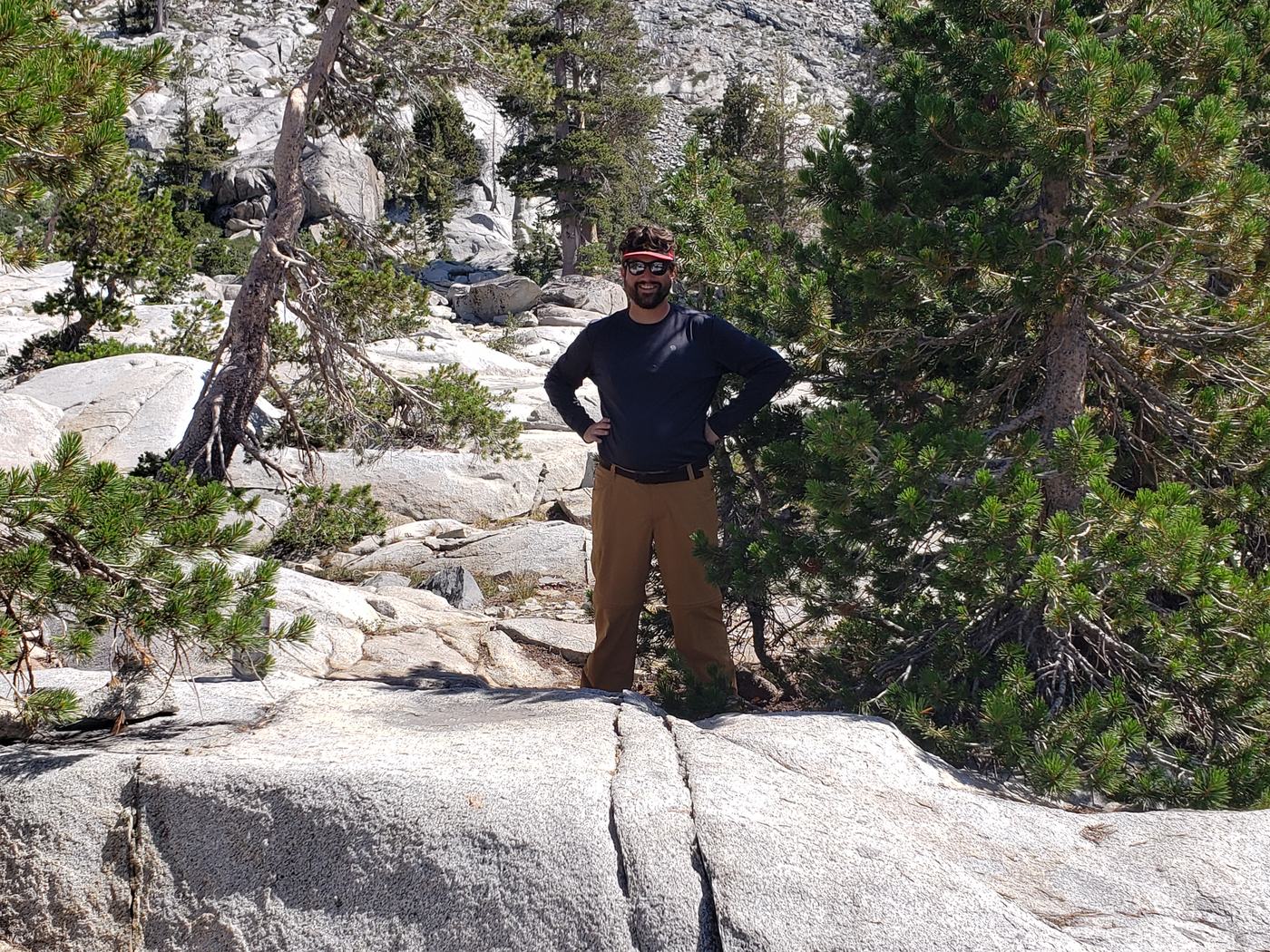
Me, a little older and a little wiser. I was still borrowing some gear, and I had finally started buying my own.
This is me eight years after my first clueless trip into this same wilderness. I was still borrowing some of my equipment, but by now I'd started chipping away at every lesson the earlier trips had beaten into me, buying my own gear piece by piece to fill the gaps. I had a real sleeping bag and a pad that actually insulated. The graduation from “making it work” to being properly outfitted for the mountains is slow and satisfying. I felt like a backpacker now, rather than a guy tagging along.
It was the height of the pandemic, and it turned out half of California had the same idea I did. Desolation was packed. The trailheads were full, the permits were scarce, and there were people at every lake. The wilderness had never felt so crowded. We had four nights planned and a proper route across the heart of the range, running Lake Aloha to Lake Gilmore to the Velma Lakes.
Day 1 Leaving Aloha
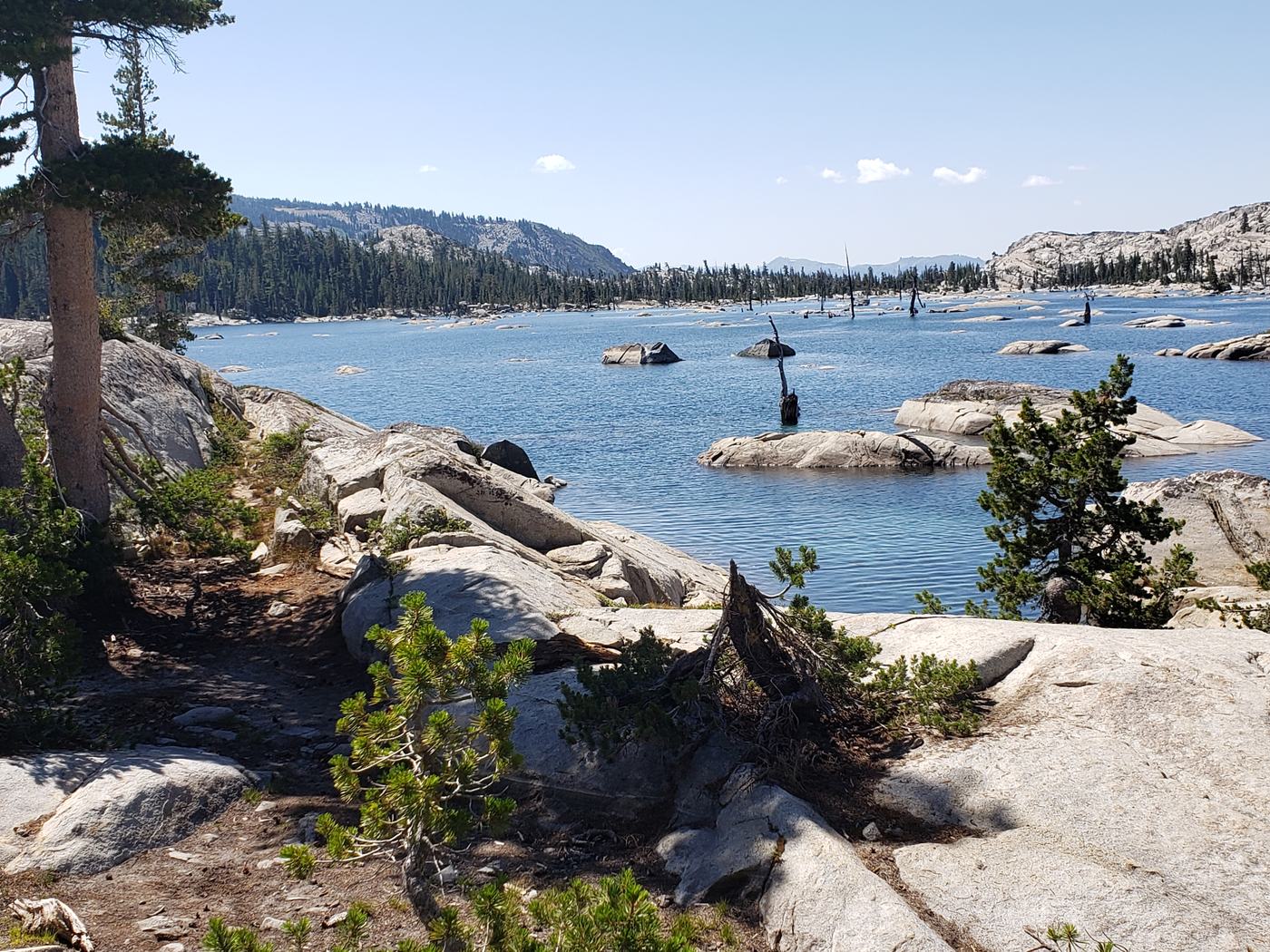
Lake Aloha on our way out, with granite islands scattered across the shallows.
We broke camp at Aloha and started the long walk deeper into the range. Aloha is one of those places that doesn't look quite real, a wide shallow sheet of water with bare granite islands poking up all across the surface and the whole basin scoured down to rock. You stop, you stare, you take the same photo everyone takes, and you keep moving.
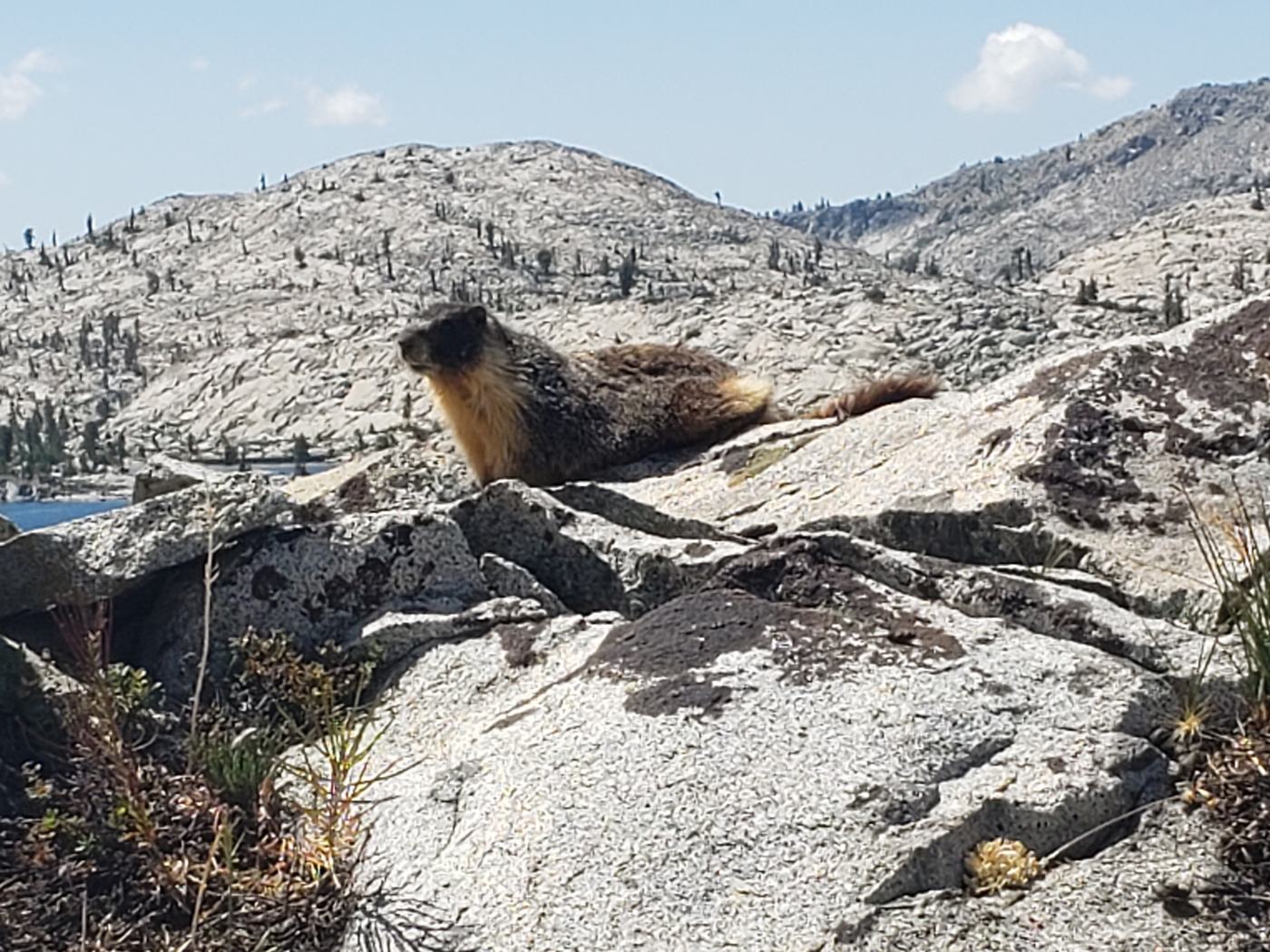
An old “friend.” Years ago, the sound this animal makes at night genuinely scared me.
And then a marmot turned up, just sitting on a rock like he owned the trail. I have a history with marmots. On my very first trips I'd hear them at night, a sharp whistling chirp out in the dark, and I had no idea what was making the sound. With no clue what was out there, my imagination filled in something much worse. Now I know better. Now a marmot on a boulder is just a friend on the trail, and all he threatens is the snacks in your unattended pack. The shift is a small one, and the shift is the whole arc in miniature, because the backcountry stops being frightening exactly as fast as you start to understand the place.
Camp A perfect site at Gilmore
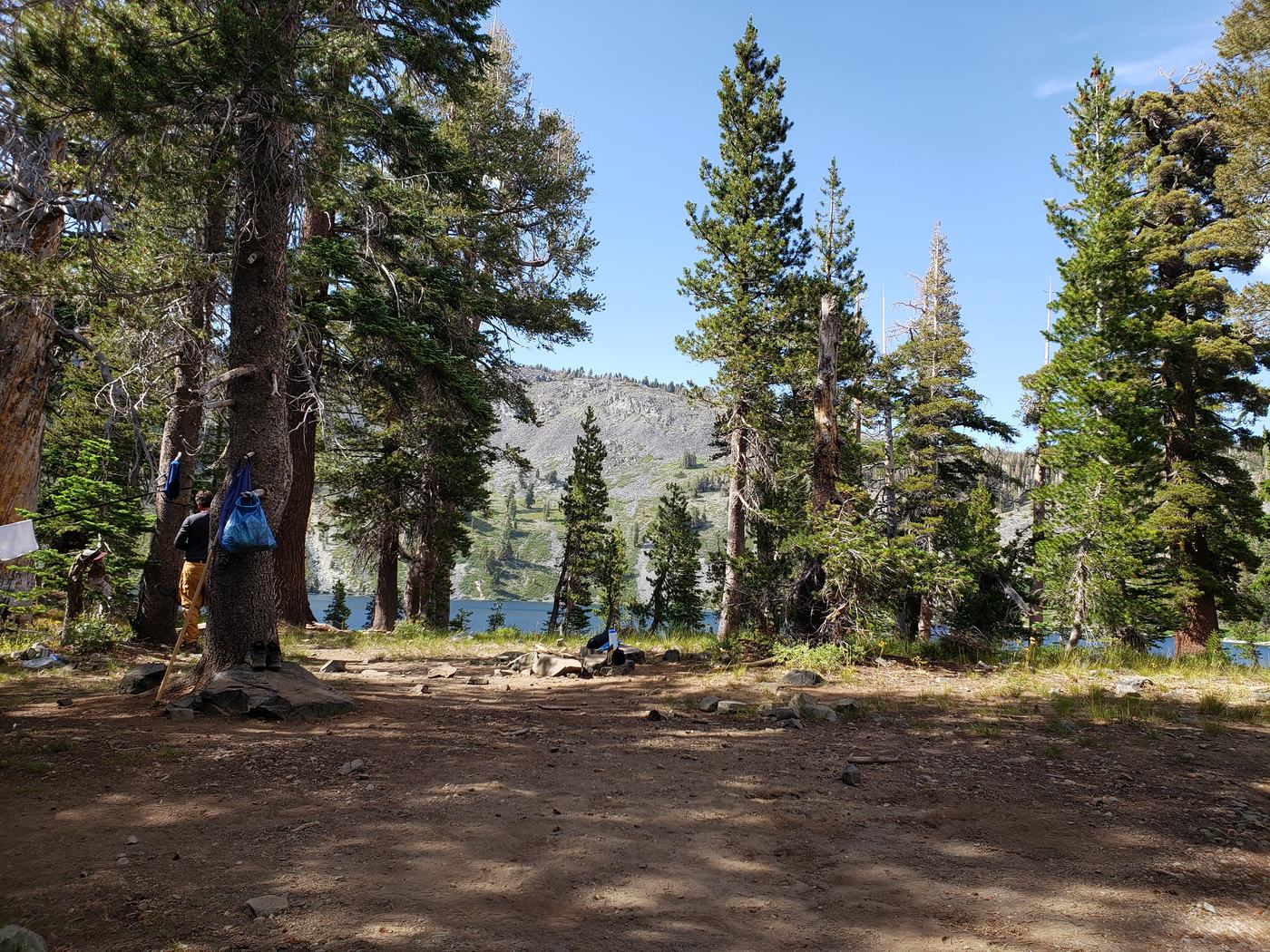
Camp at Gilmore, the kind of site you remember, flat and sheltered with water right there.
We landed one of those campsites you remember for years. Tucked in above Lake Gilmore, flat ground, a little shelter from the wind, water a short walk away. Eight years earlier I'd pitched my tent on the first marginally flat spot I could find and called it good. Now I knew what a good site actually looked like, and finding this one felt like a small victory all its own.
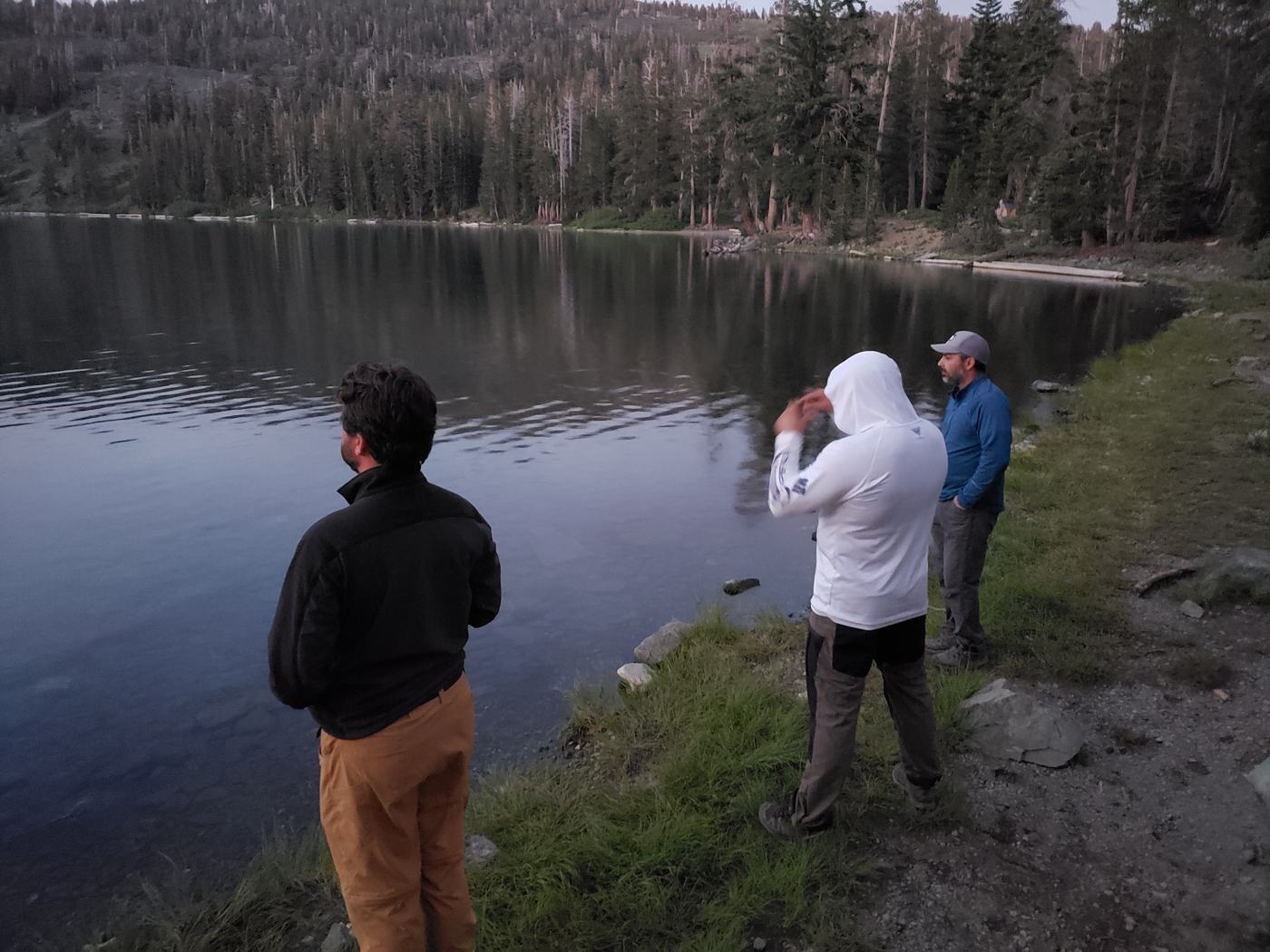
A quiet night at the lake. The crowds thinned, the water went still.
As the light went, the day-trip crowds melted away and the lake went glassy and silent. Gilmore gave us a quiet night. This is the part of backpacking that never shows up in the gear lists or the trip reports, the long still evening when there's nothing left to do but sit and watch the sky drain out over the water.
Morning A swim worth the walk
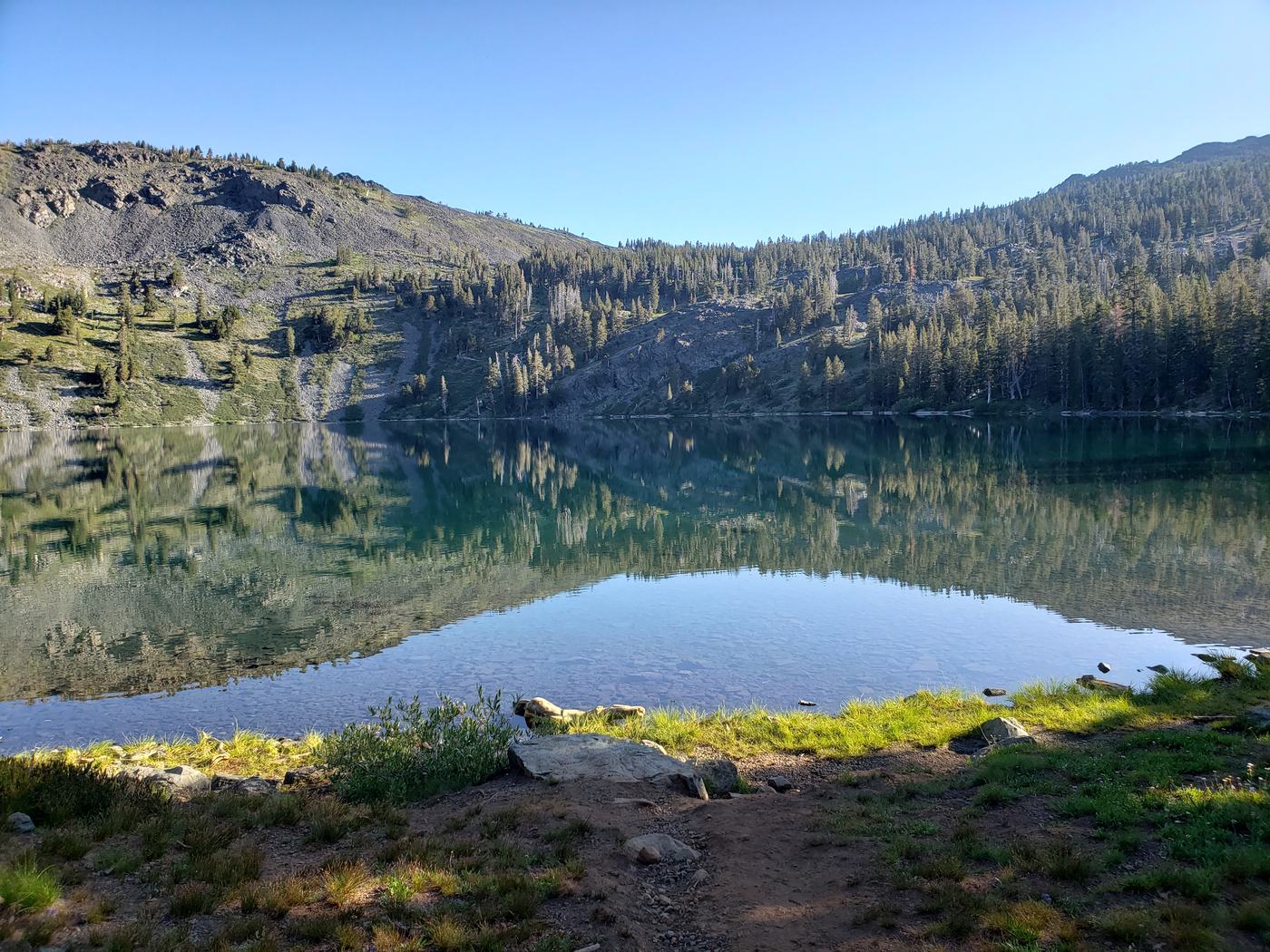
Morning brought a view and a swimming hole in the same spot, and you don't argue with an offer like that.
Morning gave us a view and a swimming hole in the same place, which is the kind of offer you don't turn down. Cold-lake swims have become a non-negotiable ritual on every trip since, because nothing resets a tired body like alpine water that makes you gasp. We swam, we dried out on warm granite, and for a little while everything about this trip was going exactly right.
Afternoon A Sierra thunderstorm
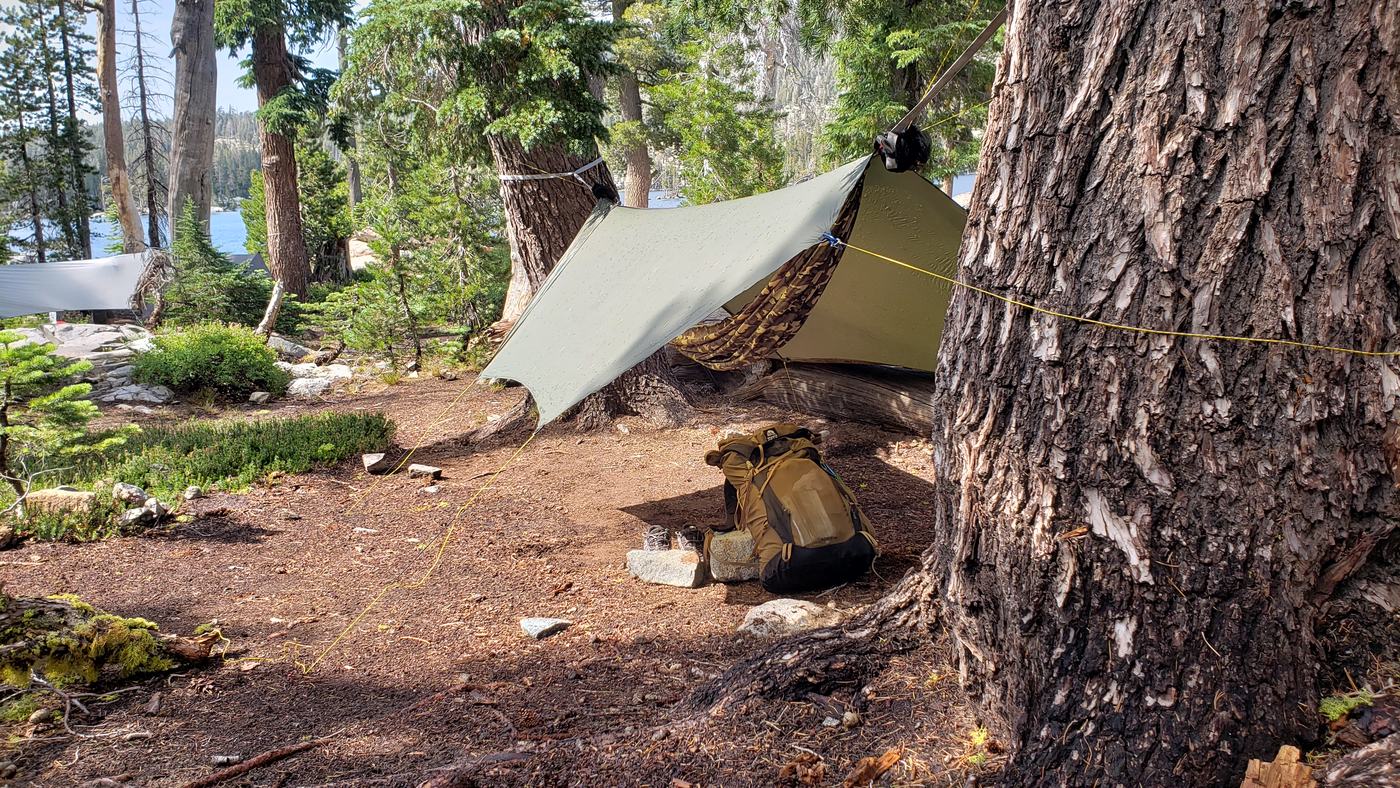
My borrowed rainfly, looking its age. The fly held through a surprise storm, and barely.
Then the Sierra did its afternoon trick. If you've spent time in these mountains in summer you know the pattern, where a bright blue morning builds into towering clouds and by mid-afternoon a thunderstorm rolls through out of what felt like nowhere. Those storms come up fast and they come up often. I dove under cover and got my first good look at my rainfly, which I realized right then was not in great shape. I had borrowed the fly, of course. The seams were tired and the coating was going. But the fly held, barely and only just, and kept the rain off me until the storm blew through. That went into the ledger as one more entry. Borrowed gear gets you there, and gear you can actually trust is what lets you relax.
Something's wrong Over Jacks Peak
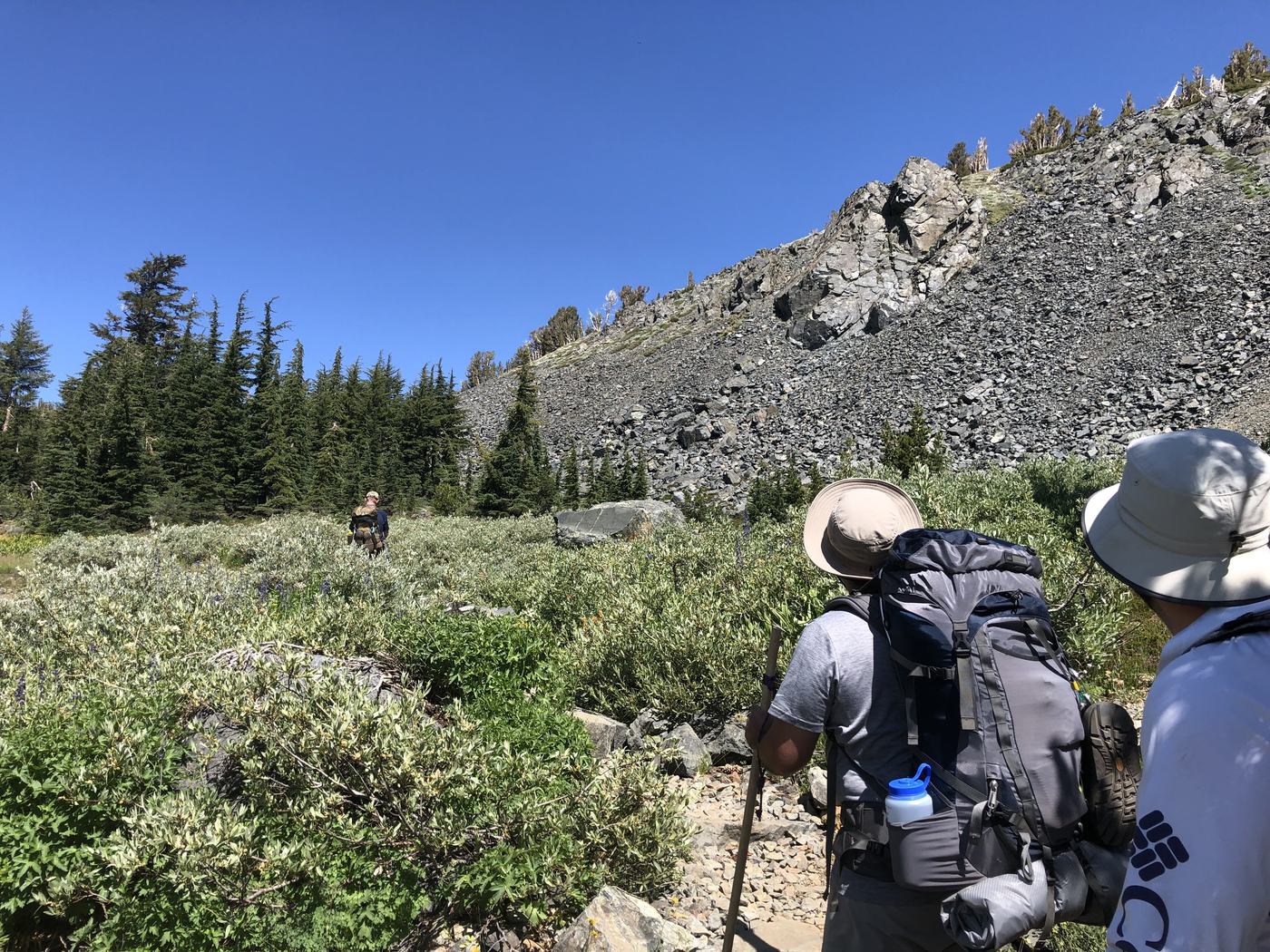
The climb up and over toward Jacks Peak. By now, one of us was already in trouble.
The trip turned on the morning we packed up to leave Gilmore. One member of our party wasn't doing well. He was vomiting before we even shouldered our packs, and there's a particular dread that settles over a group when someone gets sick miles from the nearest road. We talked it over, he insisted he could move, and so we marched on, the way groups so often do. We climbed up and over the high ground near Jacks Peak and pushed toward our next camp at Middle Velma.
He spent that evening in and out of his hammock, pale and wrung out, but as the sun dropped he seemed to rally. He ate a little. He talked. We let ourselves believe it was a bad twenty-four hours and that the worst was behind us. We were wrong.
The night that wouldn't turn Why does no one have a satellite phone?
In the morning he was worse, not better. The sensible call was clear. We'd stay put at Middle Velma another night and let him rest and gather his strength rather than drag a sick man over more passes. So we waited. We kept him hydrated, kept him comfortable, and watched.
But as that day wore from afternoon into evening, his condition slid instead of leveling off, slowly and steadily in the wrong direction. That is the moment the mood in a backcountry camp changes completely. The jokes stop. You start doing math you never wanted to do, working out how far the trailhead is, how many hours of daylight are left, who is fastest, and what happens if he can't walk at all. We began building backup plans, real ones, for getting help.
And right there, in the dark at Middle Velma, one question landed on all of us at once and would not leave. Why does no one in this group have a satellite phone? Five reasonably experienced adults, deep in a wilderness with zero cell coverage, and not one of us was carrying a single device that could reach the outside world. We had maps. We had gear. We had no way to call for help, and a friend who needed it more by the hour.
You can borrow a tent. You can borrow a stove. You cannot borrow a way to call for help at two in the morning, ten miles from the nearest road.
Getting him out A signal on the ridge
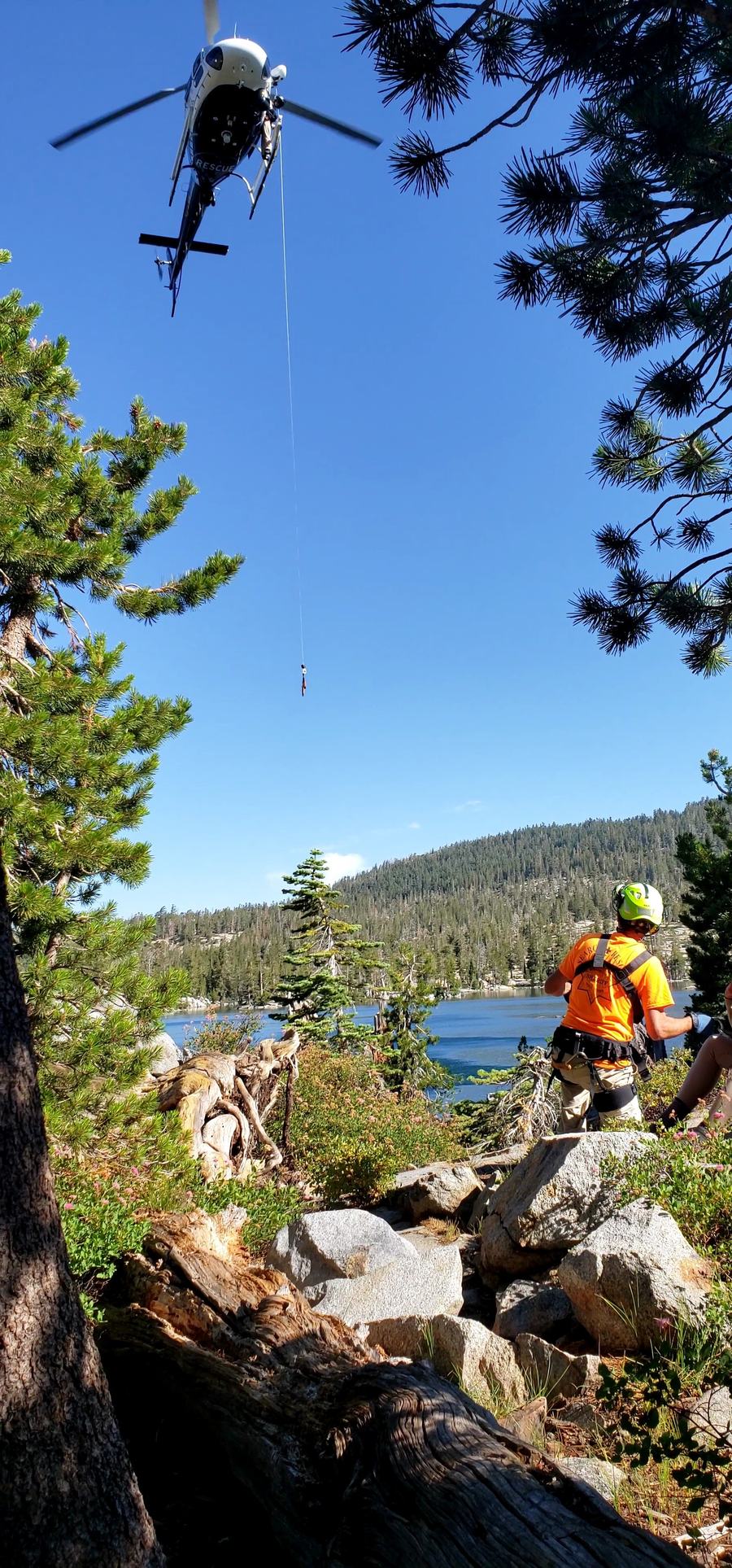
From the morning of the extraction. The effort became a full ordeal, and the effort worked.
It took most of the morning to turn fear into a plan that worked. We split the effort. One person started hiking out fast to raise the alarm at the trailhead the old-fashioned way, on foot and on the clock. And then someone remembered, or guessed, that we might be able to scrape together a bar or two of cell signal from the top of a ridge not far from camp. Knowing the terrain turned out to matter enormously, because we knew exactly where we stood and where that high ground sat. We climbed to the ridge and found just enough signal to get a call out.
From that ridgeline we got through to local emergency response and started coordinating an extraction. We gave them exactly where we were and how to reach us, along with his condition, his history, and the terrain a rescue team would have to cross. The extraction became a genuine ordeal, the kind of long tense all-hands effort you hope you never have to be part of. The effort worked. We got our friend out of the backcountry and into the care he needed, and he survived. I don't say that lightly. There's a version of that night that ends very differently, and all that stood between us and that version was a lucky ridge with a sliver of signal.
The lesson Never be unable to call for help
Every other lesson in these stories cost me a cold night, a burned lip, a few anxious hours of being lost. This one could have cost a life. The difference between a story you tell later and a tragedy can come down to whether anyone in the group can reach the outside world, and on that trip the answer was almost no.
I never go into the backcountry without a way to call for help anymore. Today an iPhone can send emergency messages over satellite, and that's a genuinely good safety net to have in your pocket. But I still carry a dedicated satellite device, a proper beacon, on every single trip, because when someone's life is on the line I want a tool built for exactly that and nothing else. A way to call for help is the one piece of gear you never, ever borrow and hope for the best on.
Backpackers Friend can't make that call for you, so carry a beacon, please. What the app can do is the part that saved us that morning. The app keeps a full topo map and your exact position on your screen with no signal at all, so you always know precisely where you are, what the terrain around you looks like, and where the nearest high ground is when you need to find a sliver of coverage. When you have to tell a rescuer where to come, “I'm not sure” is the worst possible answer. In an emergency, knowing exactly where you are is what goes right first.
Know exactly where you are
Backpackers Friend lets you build a route on a topo map before you leave home, with waypoints, trail-snapped navigation, and an elevation profile included. The app works completely offline, so your position and the terrain around you stay on screen with no signal. Pair the app with a satellite beacon and you're ready for the day that doesn't go to plan. Free to get started, no account required.