We Hiked Into Wildfire Smoke
Every other lesson in these stories left me cold, lost, or scared. This one left a mark I still carry. This lesson is the hardest one to write, and this lesson turned directly into a feature in the app, because I never want anyone to make the exact mistake I made.
Going into 2021, I genuinely thought I was done with backpacking for good. I'd done a handful of trips by then, and if I'm honest, most of them had gone sideways in one way or another, through the frozen nights and the wrong turns and the rescue. And yet, somehow, I'd come to look back on all of them fondly. That is the strange magic of the backcountry, where the parts that went wrong are exactly the parts you tell stories about later. Still, I figured my chapter was closing.
A fresh start A new trail buddy and a real kit
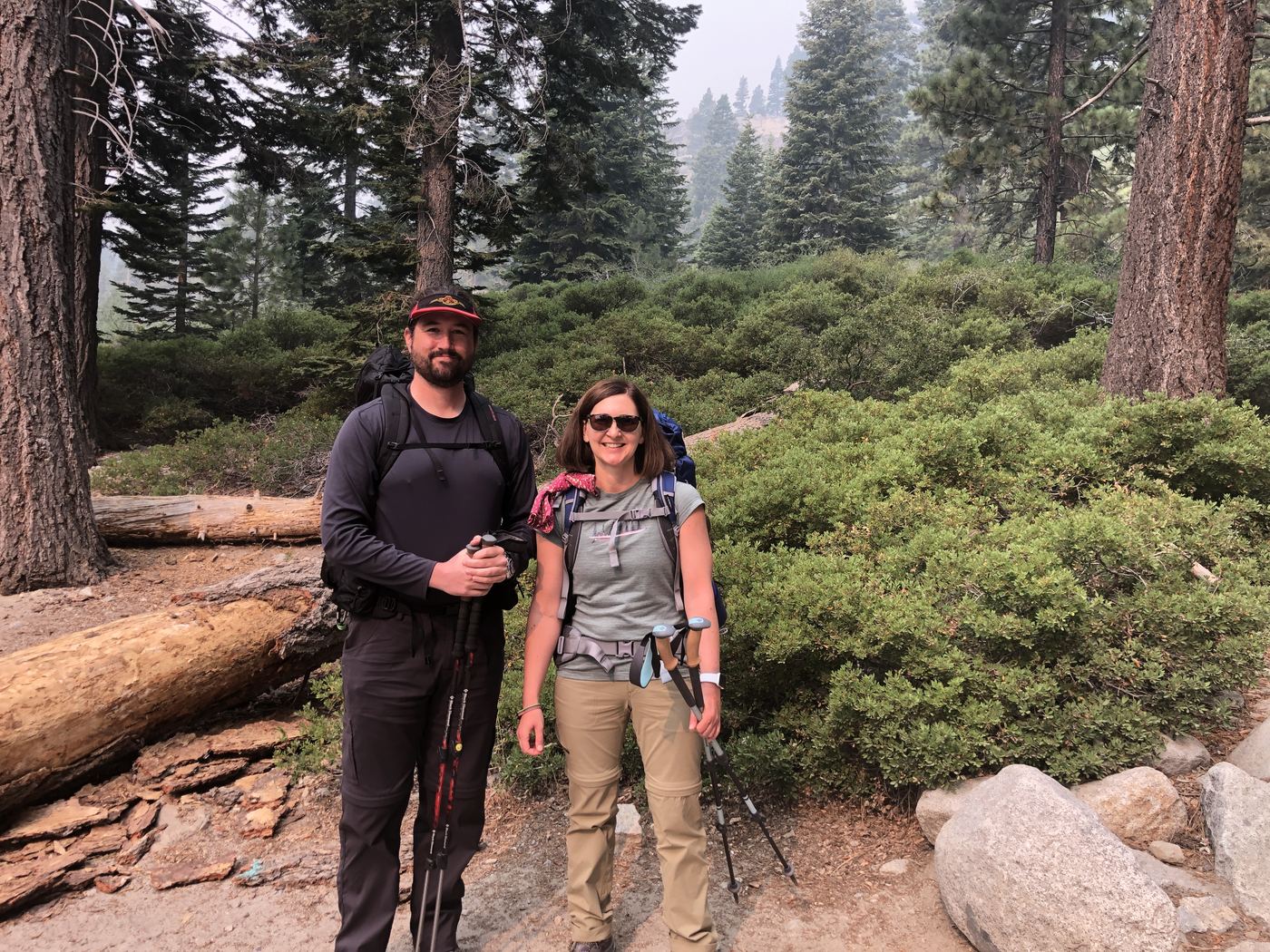
A new trail buddy, found by pure luck. We couldn't wait to get out there.
Then luck intervened. A random conversation with an old colleague turned, the way such conversations do, into a discovery that we both backpacked, and just like that I had a new trail buddy. We were genuinely excited. We picked a well-known route and set out to do it on our own, just the two of us, no group of veterans to lean on this time.
And after all those stories of borrowing everything and showing up with not quite enough of it, I finally did what I'd been putting off for the better part of a decade. I bit the bullet, spent a couple thousand dollars, and bought all my own gear. Every piece of it mine, chosen on purpose, the right tool for the job at last. I had never felt more prepared in my life, and that is exactly why the decision we made at the trailhead is so hard to admit.
The drive up The air kept getting worse
That summer, Northern California was burning. The Dixie Fire was the largest and most destructive fire of the 2021 season, and the fire had ignited in mid-July and would not be fully contained until late October. We were headed out in early August, right in the thick of the season. But the fire was well north of where we were going, so the smoke did not seem like our problem. We checked the box in our heads marked “not near us” and kept planning.
We started the drive on a perfectly clear day, under blue sky, in good spirits, with brand-new gear in the trunk. But the closer we got to the trailhead, the worse the air became. Somewhere up the road the wind had shifted and was pushing the smoke south toward us. The horizon went hazy, then brown. The air-quality reading climbed the whole way up, mile after mile, each number a little worse than the last.
My partner's phone rang. It was her husband, who had been watching the same fire news we'd waved off, and he asked her to turn around. We talked it over and decided to keep going anyway. I still remember his exact words as we declined, which were “It's your funeral.” We shrugged the warning off when we should have listened.
On the trail Pressing on past the doubt
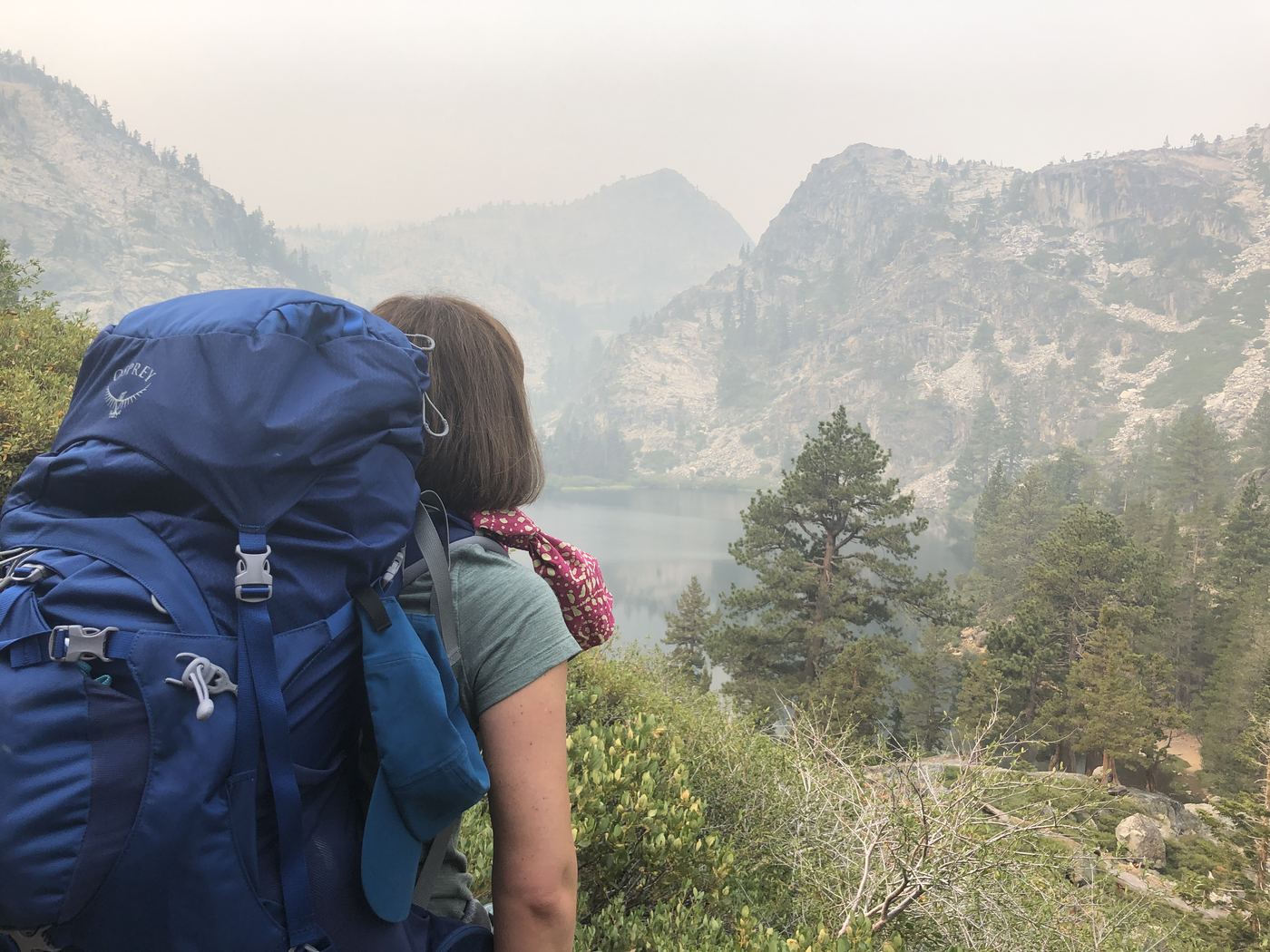
Hiking in, already wondering out loud whether we should be doing this.
We parked, shouldered our beautiful new packs, and started walking, and almost immediately we began questioning whether we should be out here at all. The light was wrong. The far ridges were soft and gray, like a photo with the contrast turned down. You could feel the smoke in the back of your throat. We said the doubts out loud to each other, and then we did what people do and pressed on anyway. We'd driven all this way, the gear was new, and the plan was good. We talked ourselves right past every warning sign the sky was waving at us.
Middle Velma The new hammock, and the question
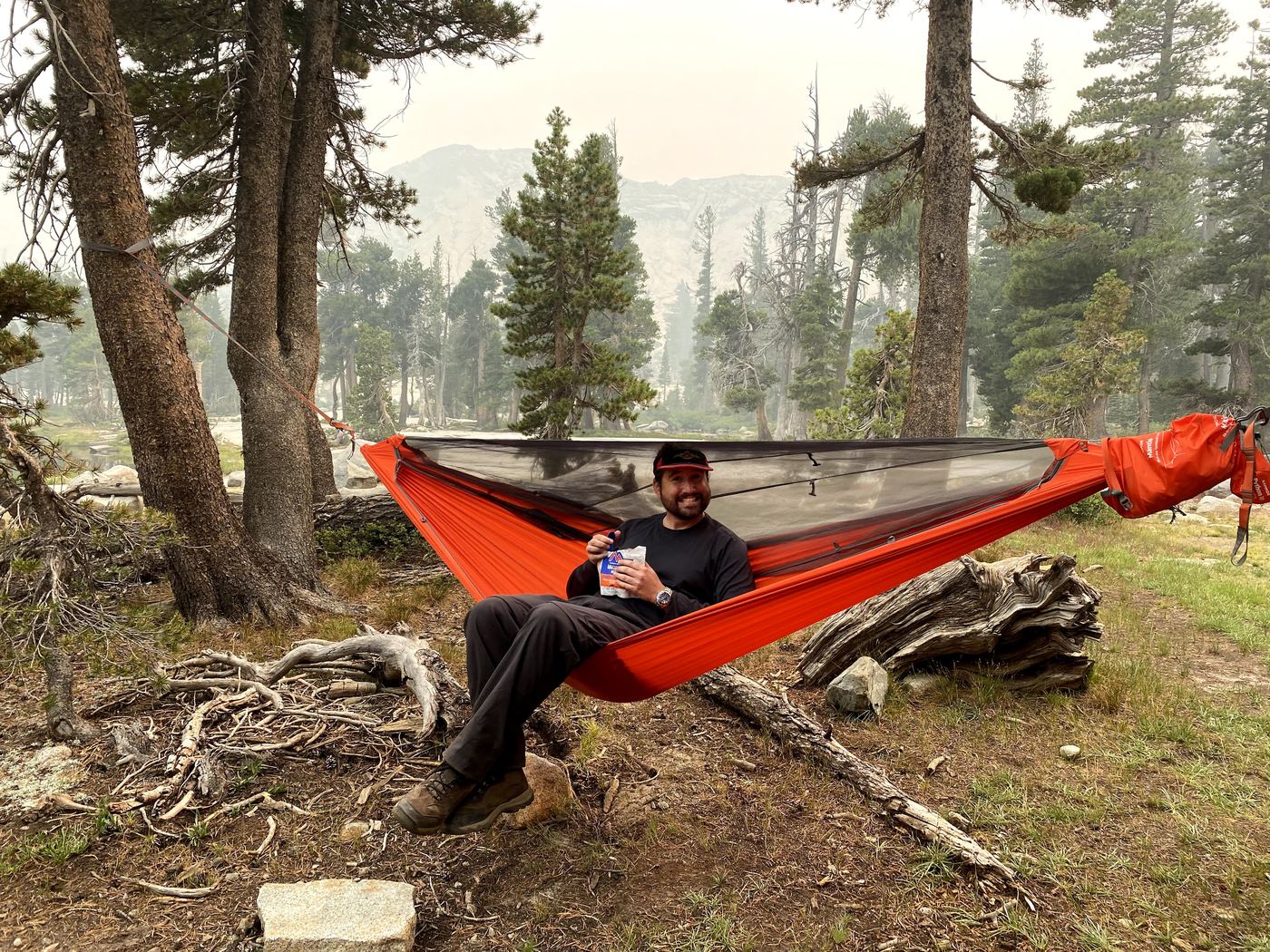
My shiny new hammock at Middle Velma. Years of lessons, finally the right gear.
We made it the six miles in to Middle Velma, and despite everything I had a moment of pure joy, because I got to deploy my shiny new hammock for the first time. After all those trips of freezing in borrowed setups, the hammock was mine, dialed in, and exactly what I'd always wanted. I sat in the hammock and looked out at the lake.
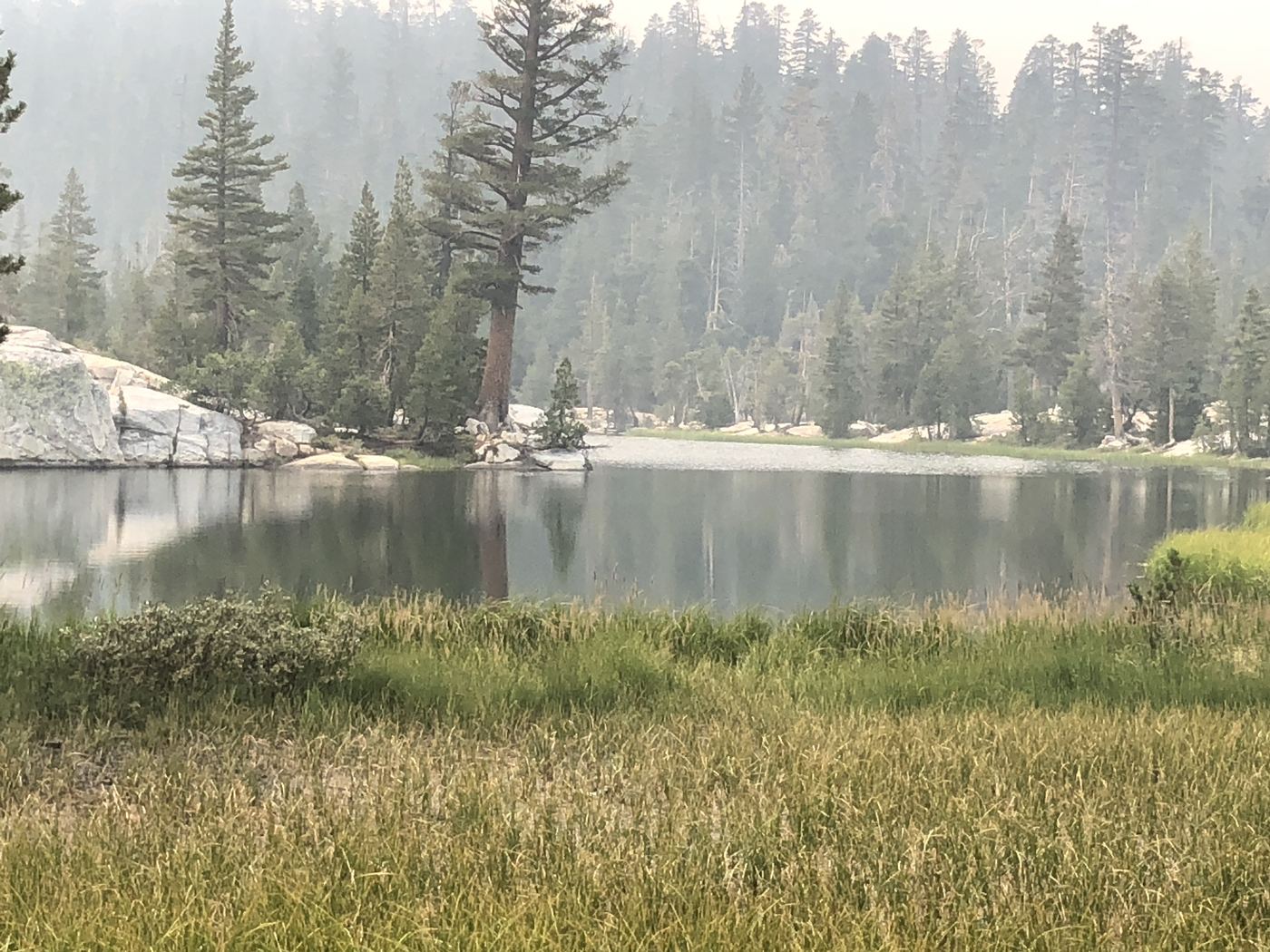
The view we'd hiked six miles for, flattened to a gray wall of smoke.
And the view we'd worked so hard to reach was a gray wall. The lake, the granite, and the far shore all lay muffled under smoke. We sat there taking the scene in, and one of us asked the question that finally broke the spell.
“So… do we douse a mask in water so we're not breathing in all this smoke?”
The instant the words were out, the same realization landed on both of us at the same time. We had made a mistake, and a serious one. If you are sitting at your destination genuinely workshopping how to filter the air you're breathing through a wet cloth, you are no longer on a backpacking trip. You are in a hazardous environment you chose to walk into. We didn't debate the point for long. We decided to turn around.
The retreat Twelve miles in a day
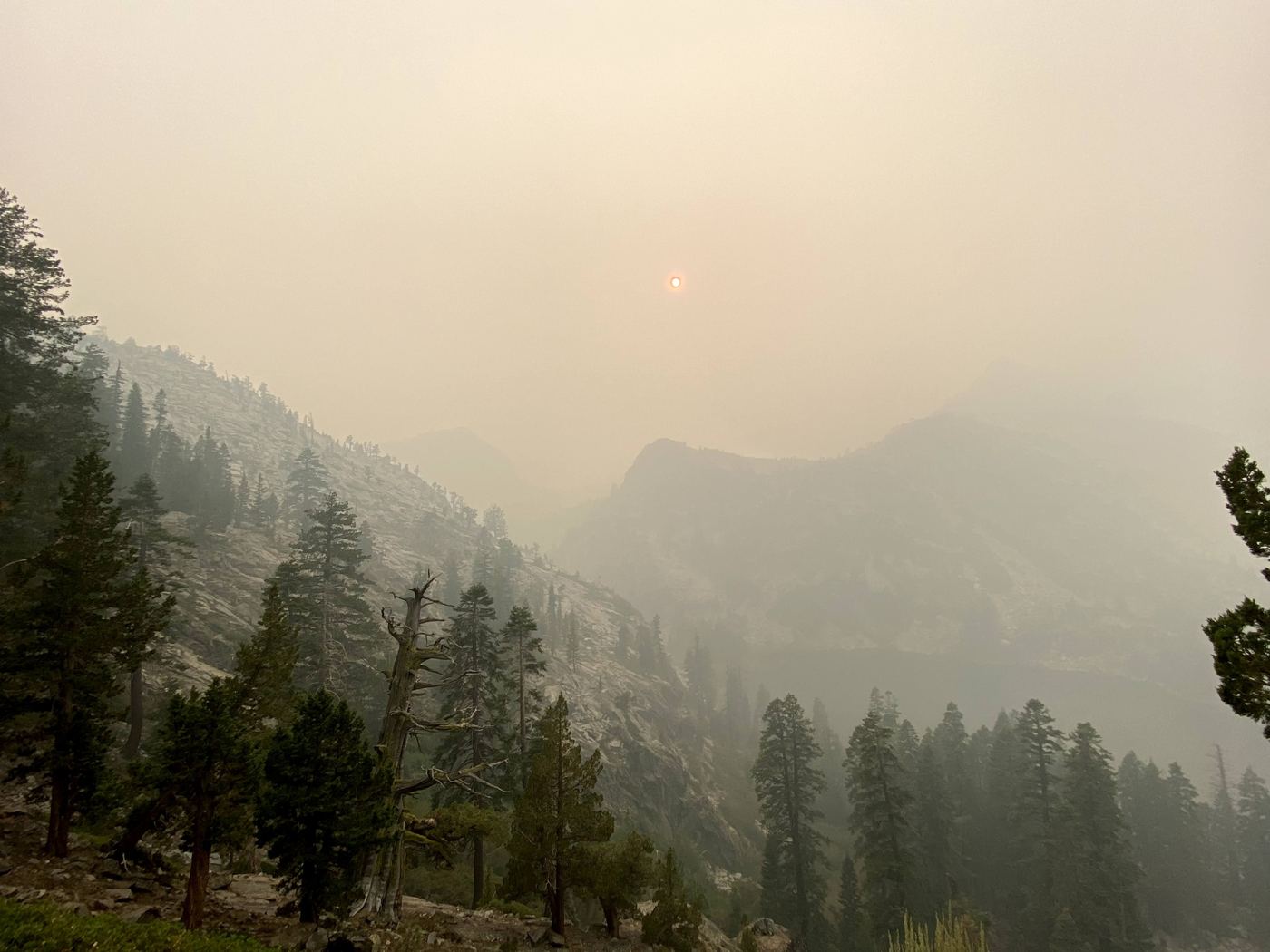
The ridge on the way out. Six miles in and six miles back, with the smoke on us the whole way.
It was six miles to Middle Velma, which meant we now hiked six miles back, twelve for the day, breathing that air with every single step. There's a bitter joke in there somewhere, since the most decisive and well-executed call I made on the entire trip was leaving. We crossed this ridge on the way out, the whole world the color of an old photograph, and got ourselves back to the car.
After The part I can't undo
I wish the story ended at the trailhead, with a lesson learned and no real harm done. The story does not end there. Weeks later I developed a serious health condition as a direct result of hiking in that wildfire smoke, a condition that genuinely put my life at risk. I'm better now. But I came away with some permanent damage that I may never fully recover from. A single day of breathing bad air, against my own better judgment, is something my body is still carrying years later.
That is the part that separates this story from the others. You laugh about a cold night, and you grow from getting lost. This trip did not give the lesson back for free. And what haunts me is how avoidable the whole day was, because the warning was right there on the screen, climbing the whole drive up. We had the information. We just didn't let the numbers change our minds.
The lesson Check the air before you go
This is the trip that put a specific feature into Backpackers Friend. The app checks the weather and air quality at the location of your hike rather than where you happen to be standing when you open the app, and gives you a clear green signal when conditions look safe to go. That distinction is the whole point. We started our drive under a perfectly blue sky at home, and the danger sat a hundred miles up the road, exactly where we were headed. Local conditions tell you nothing. Conditions at the trail tell you everything.
The reading is a small number on a screen, and a number cannot make the decision for you. What the app can do is put that number in front of your face at the moment the number matters, so you can't quietly wave the warning off the way we did. Always double-check the conditions where you're actually going before you leave. I live by one rule now, and I would hand the same rule to anyone heading out.
If you're asking yourself whether you should go, that's usually your answer. Maybe you shouldn't.
If you go How the Desolation permit actually works
Desolation is one of the most heavily used wilderness areas in California, and every overnight trip into it needs a permit, year round. All of it runs through Recreation.gov under the Desolation Wilderness overnight permit. You create an account, pick your entry date, pick a zone, pay, and carry the permit with you.
The part that surprises people is how little you actually have to commit to. The wilderness is divided into 45 overnight zones, and the quota applies only to your first night. You choose the zone you'll sleep in on night one, and once you've spent that night there, the zones stop mattering. The rest of the trip is unrestricted, and you can camp anywhere in Desolation you like. So all the reservation system genuinely needs from you is an honest answer to one question. Where can you get to on the first day? Everything after that you're free to work out with your feet, which is the right way to move through country like this anyway.
The mechanics stand as follows.
- Quota season runs from the Friday before Memorial Day through September 30. Outside that window you still need a permit, but there is no quota and it does not sell out.
- Each entry date opens six months ahead, at 7 a.m. Pacific. It's a rolling window, first come first served, with no lottery and no second release. Popular zones on summer weekends go in minutes; midweek in September you can often book the day before.
- Seventy percent of each day's quota is reservable online. The other thirty percent is held back for walk-in, same-day issuance at a ranger station, so a sold-out screen in July is not the end of the conversation.
- Cost is modest. Five dollars a person for a single night, ten dollars a person for two through fourteen nights, plus a six-dollar reservation fee on the booking. Children twelve and under are free. The Forest Service has proposed raising the per-person fee, so check the number when you book.
- Groups are capped at twelve people.
Pick a first-night zone you can reach comfortably rather than the one you most want to see. A six-mile day into Middle Velma is a reasonable first night; the lake you're dreaming about two ridges further on is still available to you on night two, without asking anyone's permission. And keep in mind what the permit is and isn't. It tells you where you're allowed to sleep and roughly how many other people will be sleeping near you. It has nothing at all to say about the air above that campsite. I held a two-night permit for that trip and spent neither of them. A permit is a reservation, not a green light.
Check conditions before you commit
Backpackers Friend checks the weather and air quality at your trail rather than only where you're standing, and gives you a clear go signal before you leave home. Plan your route on an offline topo map, see the forecast and AQI at your destination, and make the call with real information. Free to get started, no account required.