My Rain Jacket Failed at the Seams
This was the second backpacking trip a close friend and I had taken together, and we were still in the stretch where every trip doubled as an experiment. We were working out which gear held up, what was worth carrying, and how far the two of us could reasonably go before the walking stopped being enjoyable. On this one we ended up testing rain gear, and mine did not survive the review.
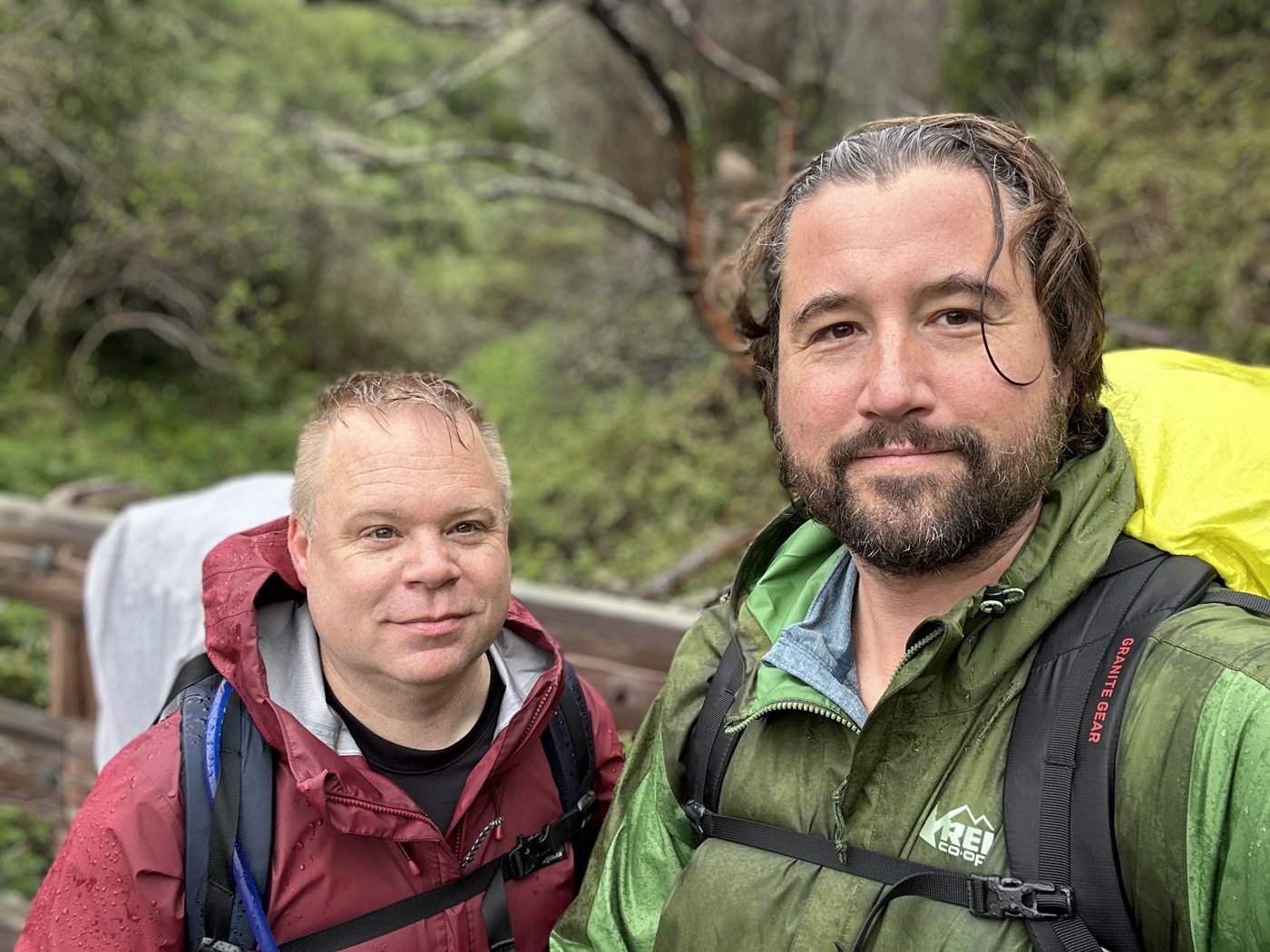
My friend on the left, me on the right, both of us already wet through. The yellow is a rain cover over my pack, which held up considerably better than the jacket did.
The plan was two nights. We would walk in from the Bear Valley trailhead, over Mount Wittenberg, down to Coast Camp for the first night, then south along the shore to Wildcat for the second and out the following afternoon. We set off on February 29, 2024, which is to say we walked in on a leap day. The whole trip happened on a date that only exists once every four years, and I did not think about that once while I was out there, which I regard as a waste of a perfectly good coincidence. Rain fell the entire way in, the steady, unhurried, thoroughly committed rain the California coast turns out in February, which soaks everything at the same patient rate and keeps on until dark.
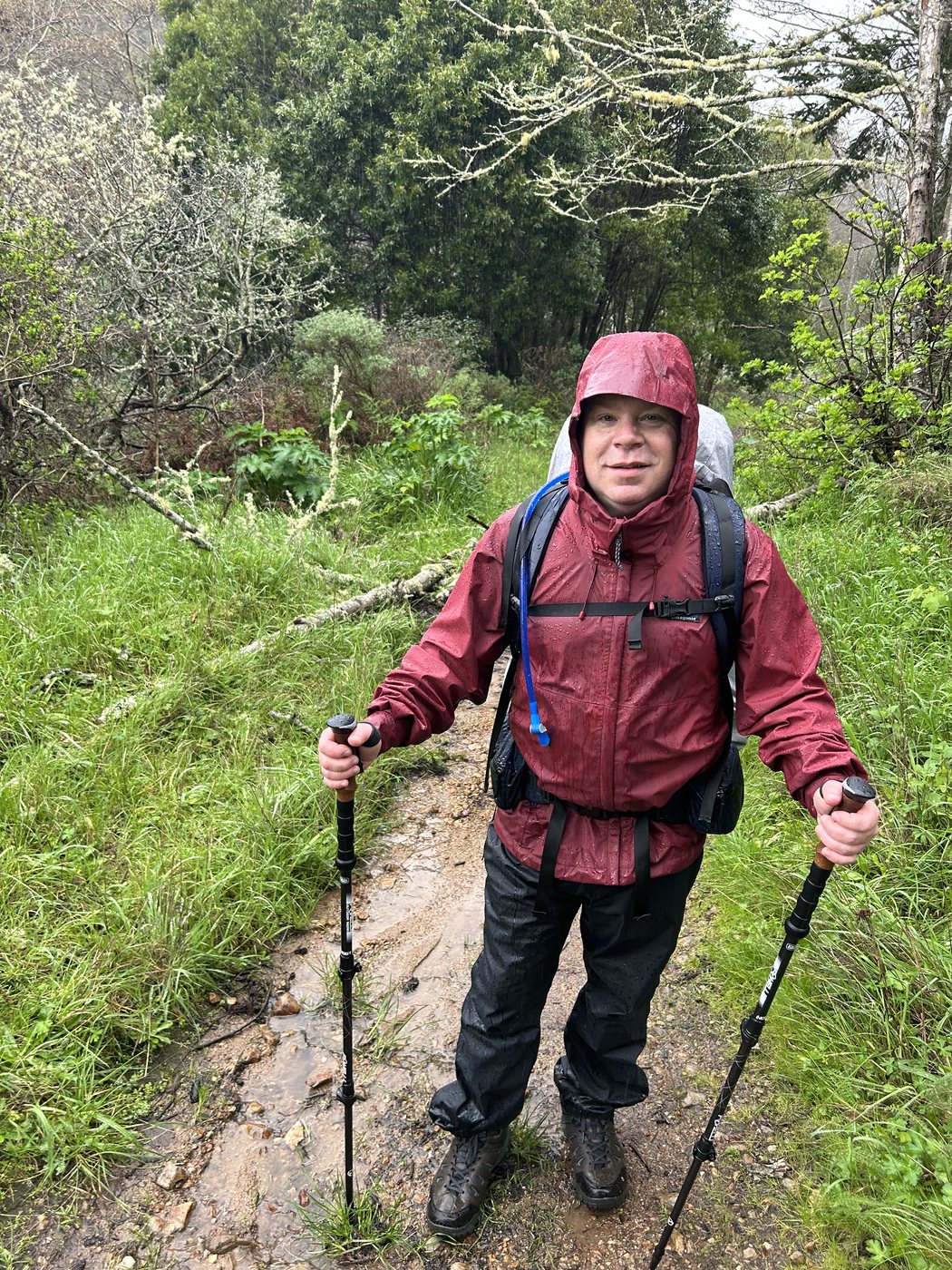
A foggy day is the finest walking Point Reyes has to offer, and I will hold that against any clear one, because the fog remakes the place. It rises through the burned ground and gathers about the standing dead, softening the black trunks and the bare limbs until a whole scarred hillside resolves into one continuous, quiet, gently gray wash; and the moisture comes down and settles over you and stays, so that you walk along inside a small moving room of visible world with nothing at all beyond its walls, protected and exposed in the same breath, the air cool enough that the climbing costs you nothing.
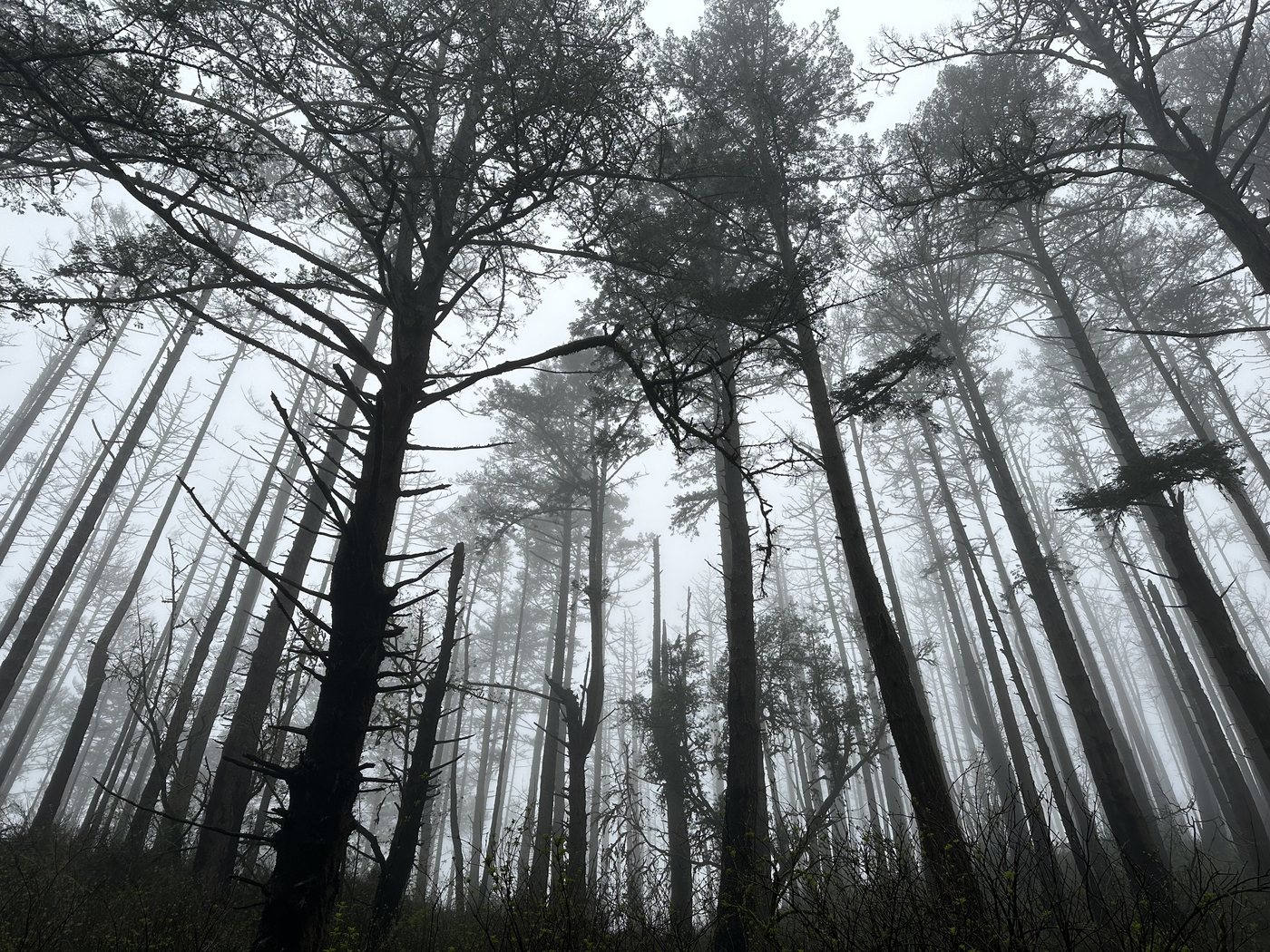
Looking up through the fog. On a clear day this is a hillside of dead trees; on this one it was something else entirely.
Somewhere in the middle of all that I discovered that my rain jacket was not really a rain jacket. The fabric held perfectly well, and it was the seams that let me down, because they had never been sealed, so every line of stitching across the shoulders and down the arms passed water through a drop at a time until my shirt was wet, and then carried on passing it until my underwear was wet too. It is an undignified detail to report, which may be why gear reviews leave it out. A shell can shed rain across every square inch of its surface and still deliver it to your skin along the threads holding it together, and you learn that four miles in, on a hillside, in February, with a long way still to walk.
Partway along we came on a tree lying across the trail, snapped clean through rather than pulled out of the ground, the break having opened its trunk lengthwise into long pale splinters. The inside of that trunk was magnificent. Wet, raw, unweathered wood ran the color of a coal fire, orange going to deep red the whole length of the split, and on a hillside the fog had reduced to twenty shades of gray that wood was the only color for a hundred yards in any direction. A tree keeps that hidden its entire life and shows it exactly once. We both stopped and worked our way around it with our phones out, which is the most reliable measure I have of how something looked in person.
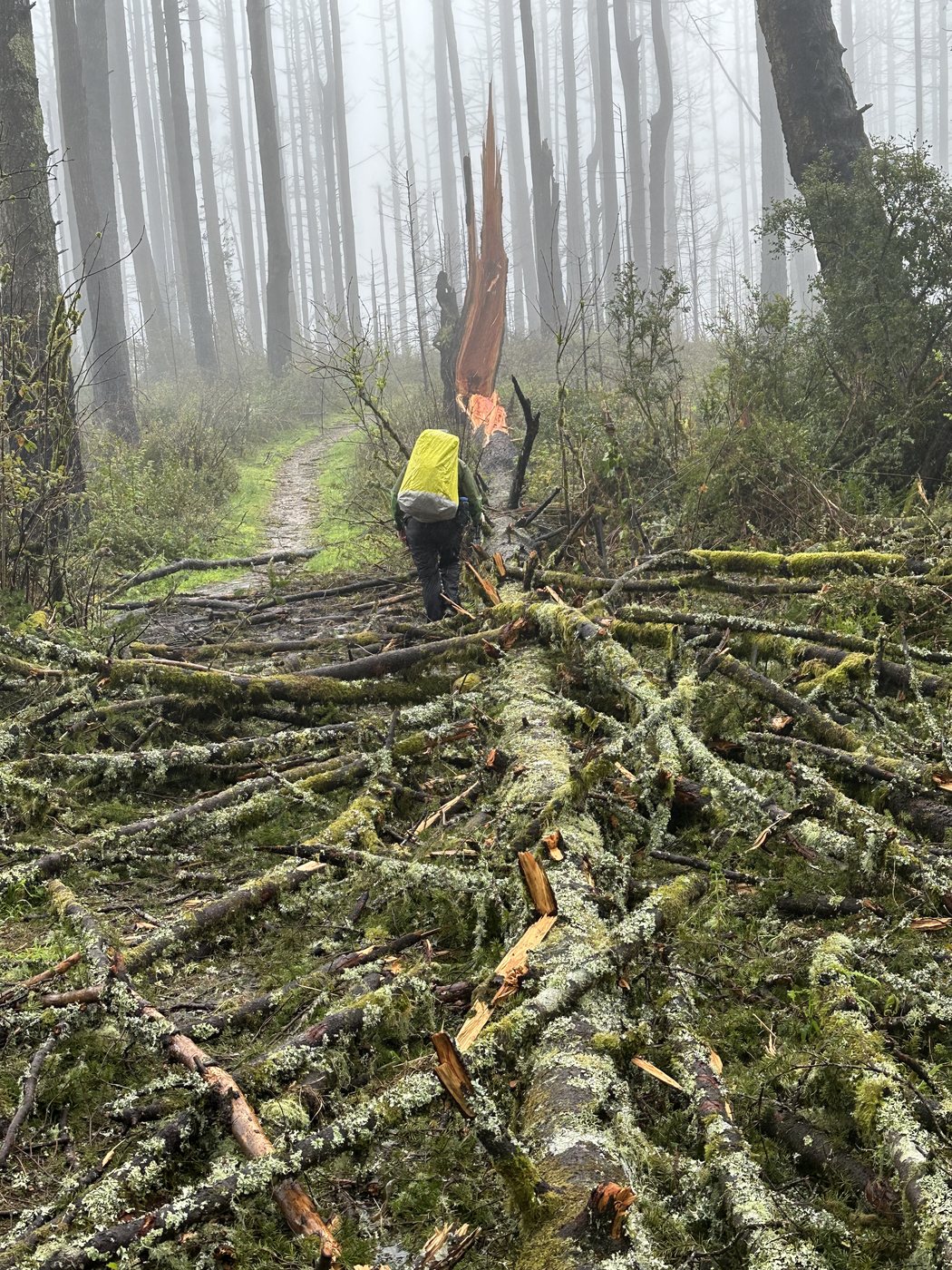
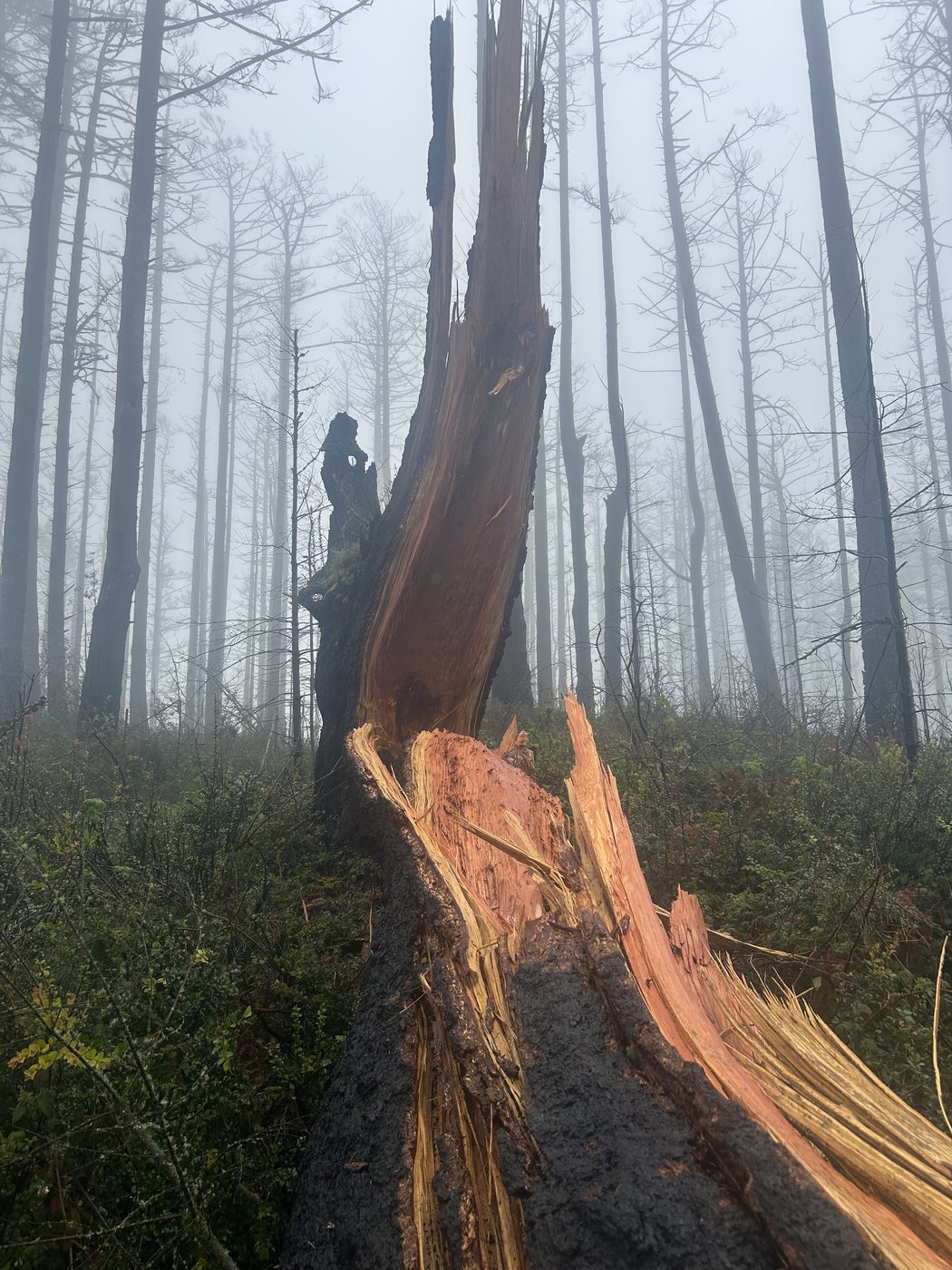
The broken trunk, opened up by the fall. The only color on the whole hillside that afternoon.
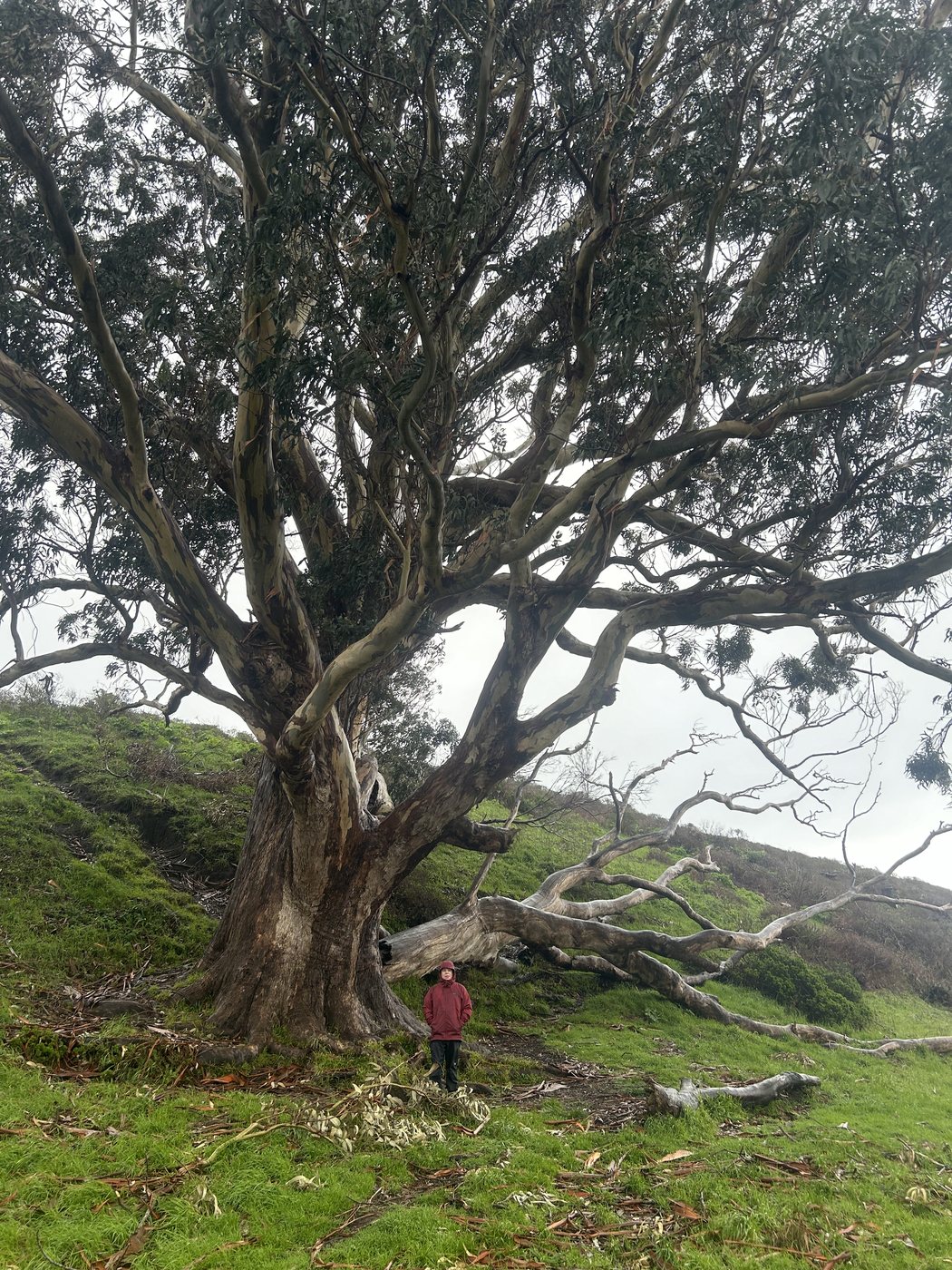
Coast Camp sits in an open bowl of grass a short walk back from the beach, ringed by low hills, with very little standing between the sites and whatever the ocean happens to be doing. We got the tent up in the rain, kneeling in grass so green and so completely saturated that it had long since stopped mattering whether we knelt in it or not. There is an old tree near the camp that has spent decades leaning away from the water and now runs further sideways than it stands tall, its lower limbs lying along the ground like the roots of something growing upside down. Wind made that shape, patiently, out of years of pressure from a single direction, and to stand beneath it is to be handed a fairly plain statement of the prevailing conditions on this stretch of coast.
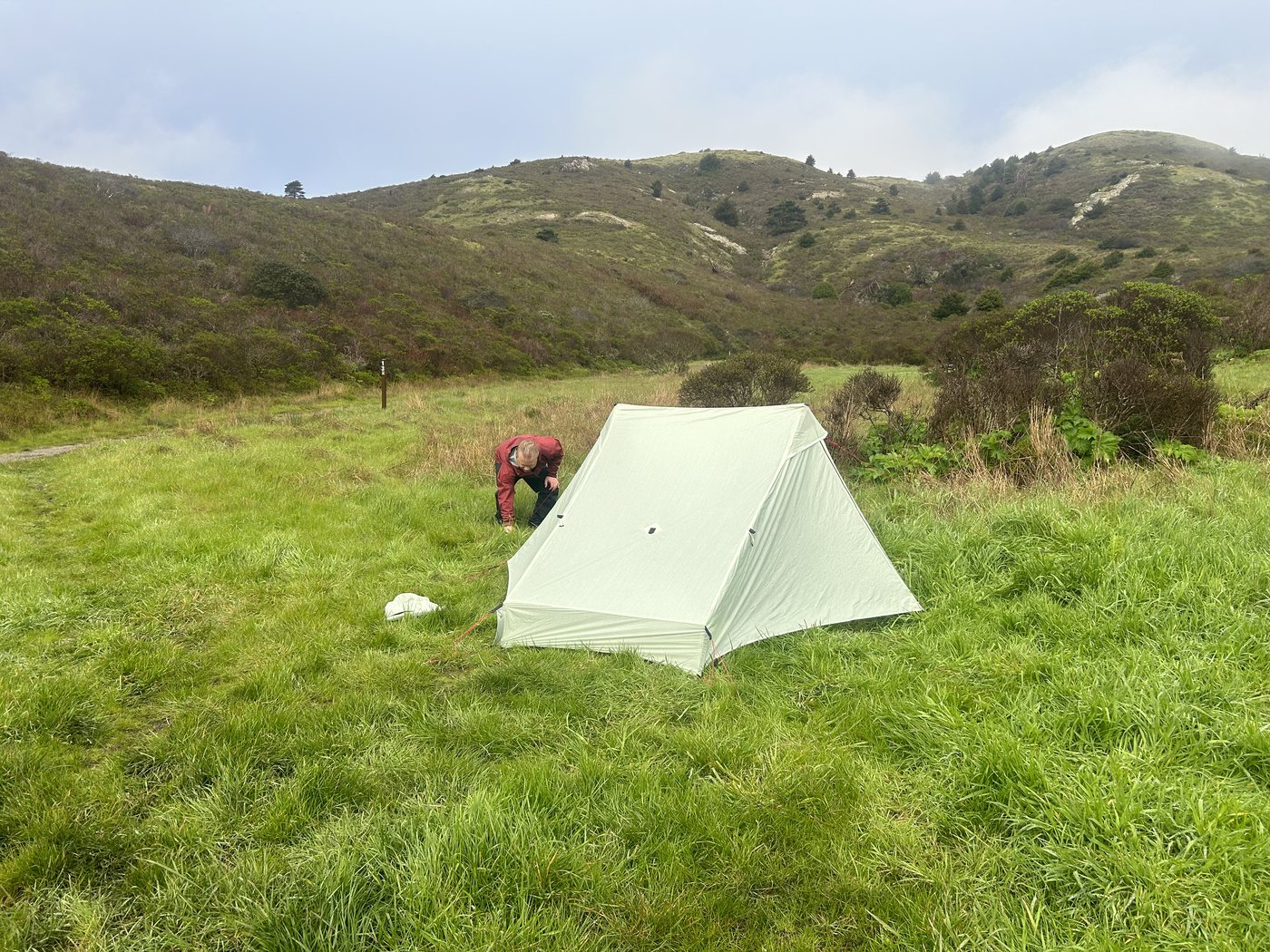
Camp in the bowl at Coast Camp, green and open and almost completely unsheltered.
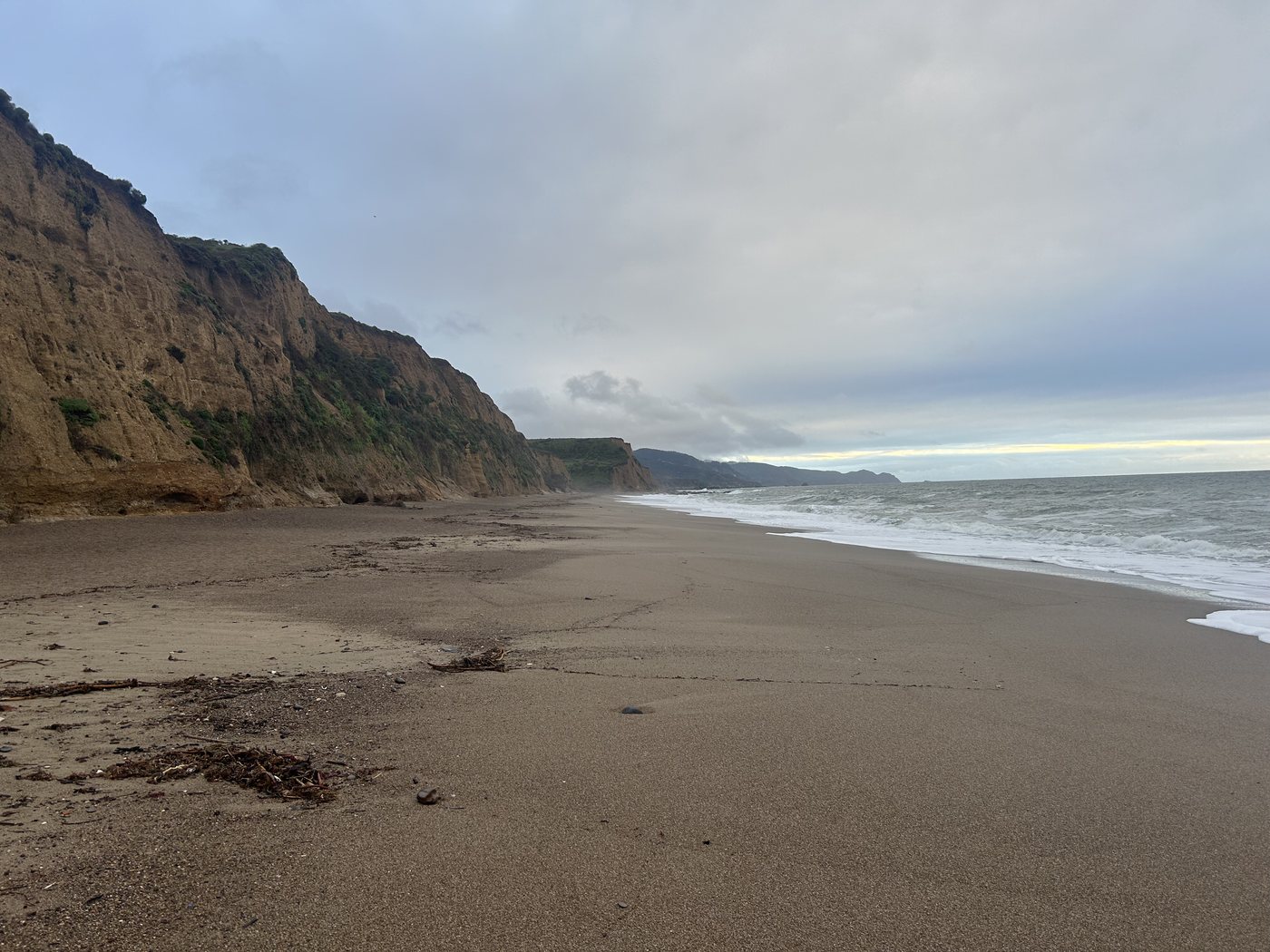
The beach was empty from one end to the other. The tide had drawn back and left a wide flat expanse of hard sand running south beneath crumbling bluffs, and the surf came in long and gray and unhurried under a sky that was only a slightly brighter version of the same color. I took the same photograph of it about ten times, and every one of them came out flatter than the beach actually looked, which I have come to accept is simply what happens when you point a phone at gray water under a gray sky.
In the evening we sat at the picnic table in the rain and played Hive. The game comes along because the tiles are solid and entirely indifferent to weather, which is more than can be said for cards or anything else made of paper. The set weighs 6.9 ounces, an absurd amount of weight for a game I am not convinced anybody actually enjoys, and the set keeps getting packed anyway. Sitting at a wet concrete table in a downpour, playing a game neither of us is especially fond of, made for a considerably better evening than that description suggests.
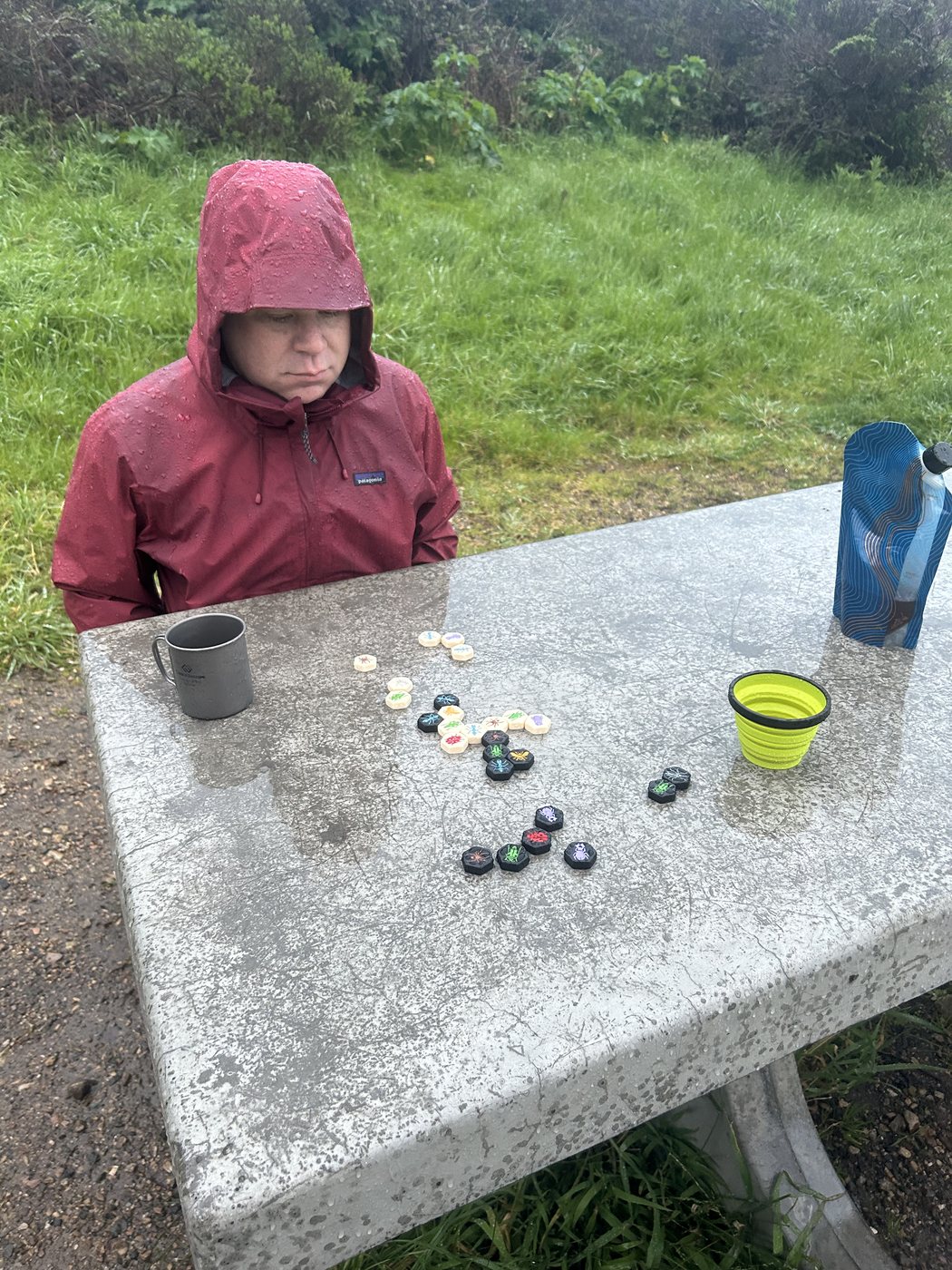
My friend considering his move. Titanium mug, soft flask, collapsible cup, and 6.9 ounces of hexagonal plastic.
The wind came up as the light went and never let go, sustained somewhere above thirty miles an hour with gusts I would put near fifty, pouring straight into that open bowl all night long. The tent held, and I want to say so plainly, because it did exactly what it was built to do and stood solid all night; the trouble was that however carefully I reset the stakes and drew the guylines tight, some panel of fabric always found a little slack and spent the night buzzing and cracking a foot from my head. I lay there and listened to it, and there is no arguing with a tent at two in the morning.
By first light the second night had lost whatever appeal it once held. Wildcat would have carried us further out along the same exposed coast, into the same wind, for another night of the same sleep, and neither of us wanted that, so we let the second night go and walked out on the Coast Trail back to Bear Valley instead, nine flat miles with the rain still coming. I enjoyed every one of those miles. Walking all day in steady rain is genuinely refreshing to me, and a trip cut short is still a good trip; we got the miles, we got the fog, and we came home knowing two useful facts about our gear.
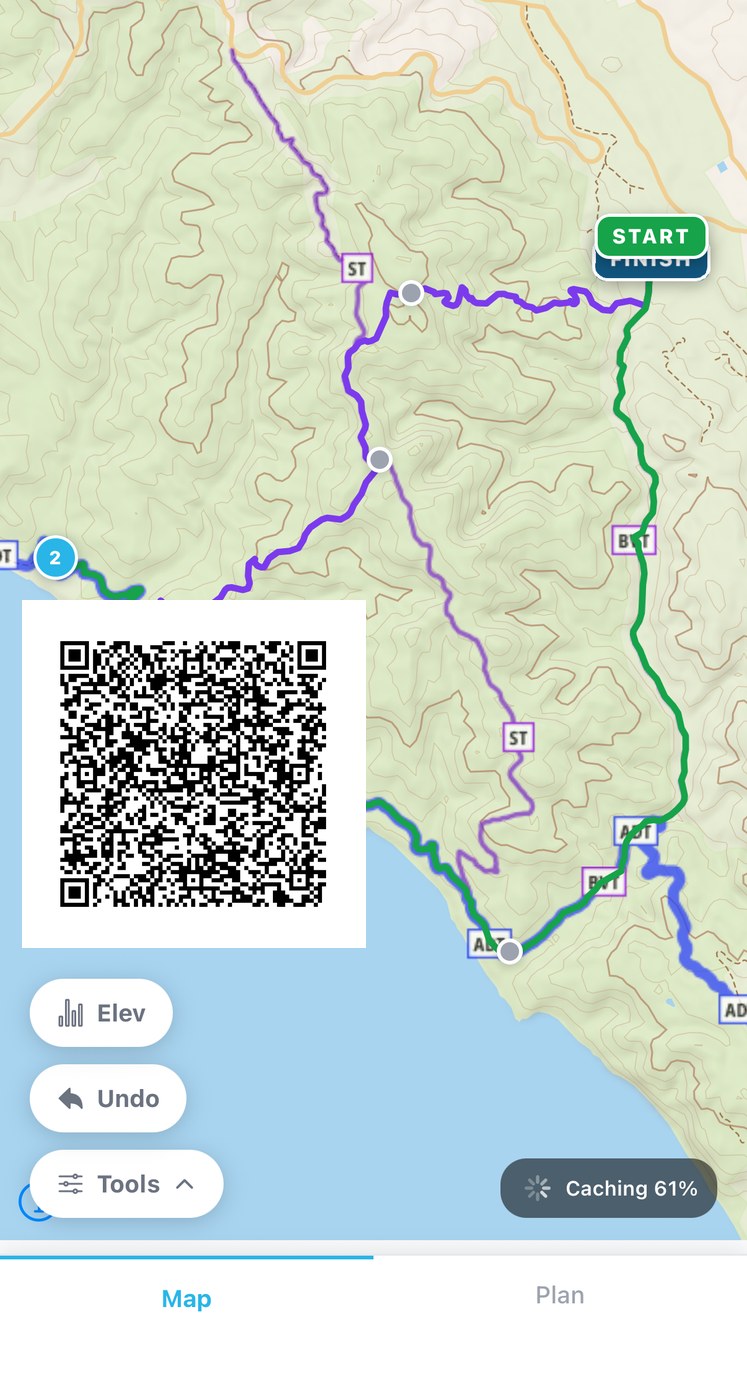
The actual trip in Backpackers Friend. In over Mount Wittenberg, out along the Coast Trail, Coast Camp marked at the shore. Scan the code to open it on your phone.
I want to be careful about what I claim here, because it would be easy to overstate it. The rain needed no forecast, since it was falling on me, and I would have walked into it gladly whatever a forecast had said. The wind needed no forecast either once I was standing in it, because by then it was simply a fact, and the only question left was what to do about it. What I lacked was the wind number before I left the house, and that is the single piece of information that would have changed a decision. Thirty sustained with gusts to fifty is survivable at a place like Coast Camp and a guarantee of a poor night, and had I known it I would have planned one night instead of two and driven home a day early by choice rather than by concession. Rain is a condition you dress for and wind is a condition you plan around, and knowing which of the two you are walking into is the whole difference between cutting a trip short and choosing its length.
I did fix the jacket, in the sense that I stopped trusting a shell because it was cut from the right fabric and started checking whether anybody had bothered to seal the seams.
Check the wind before you drive out
Backpackers Friend shows the forecast for the place your trip actually goes, with wind, temperature, and precipitation along the route you planned, so you can decide how many nights to pack for before you leave. Plan the trip, cache the map, and go. Free to start, works fully offline, no account required.